Döner vs gyro
Short answer
Both use a vertical spit, but a Greek gyro commonly uses soft pita and tzatziki, while German döner commonly uses toasted flatbread, more salad, and garlic, herb, or chili sauces.
Döner and gyro both cook meat on a vertical rotisserie and shave the browned outer layer. They belong to different food traditions. A Greek gyro commonly uses pork or chicken, soft pita, tomato, onion, and tzatziki. German döner commonly uses beef, veal, lamb, or chicken with cut flatbread, cabbage or mixed salad, and garlic, herb, or chili sauces.
Menus adapt by country, and US “gyro” can refer to a formed beef-and-lamb cone unlike pork gyros in Greece. Munich’s public food-control guide compares döner and gyro composition under German naming practice; a US restaurant may use the words differently.
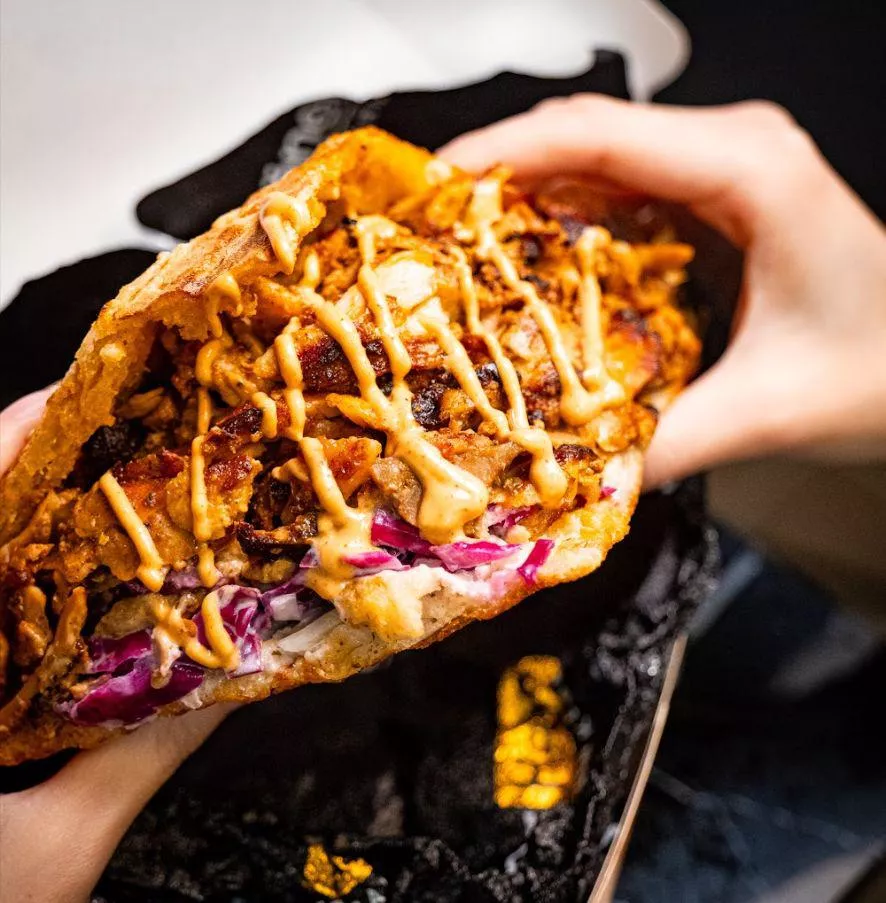
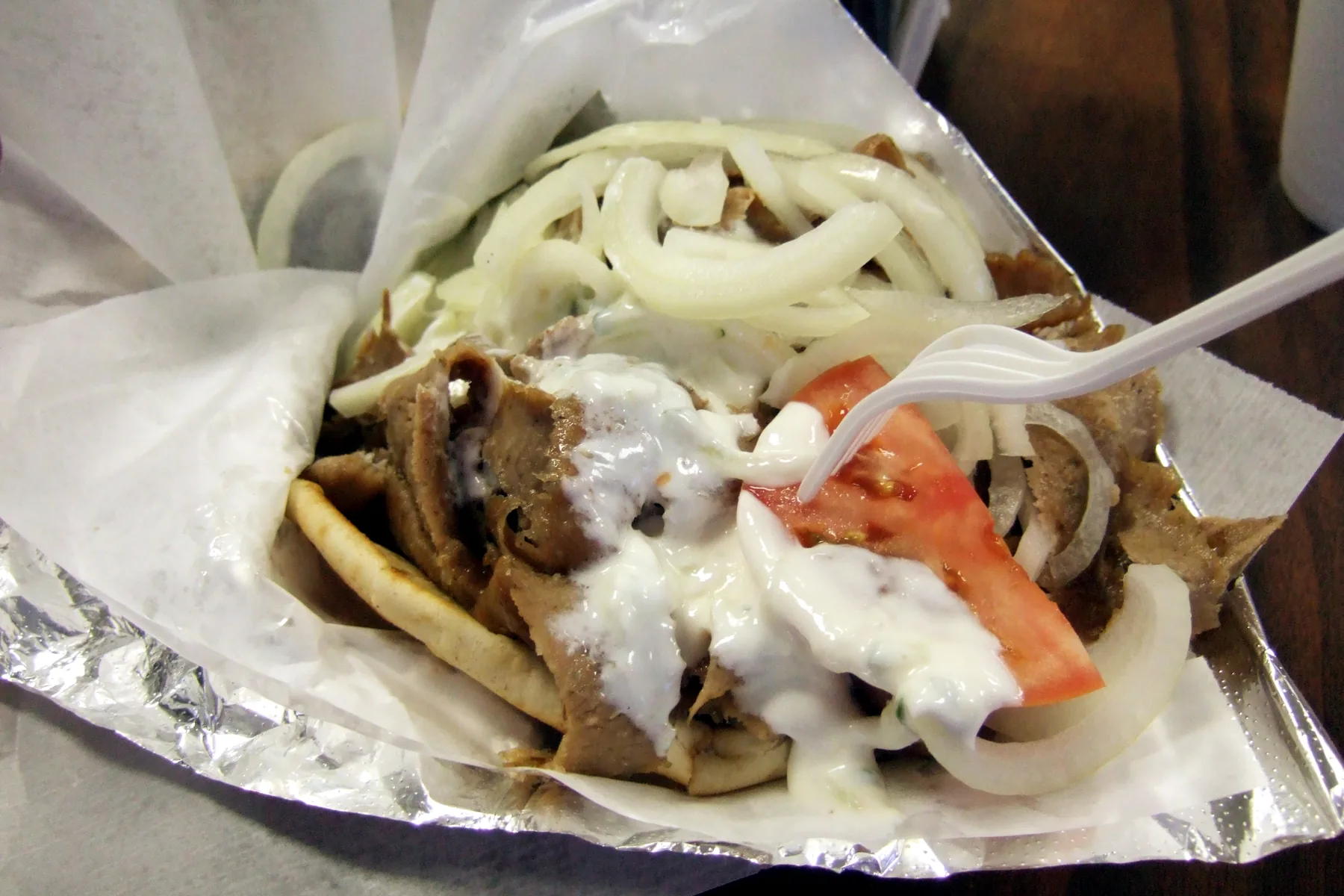
| Feature | German döner | Greek gyro |
|---|---|---|
| Food tradition | Turkish-German / Berlin | Greek |
| Meat | Veal, beef, chicken, or lamb | Pork or chicken (often) |
| Typical seasoning | Varies; often savory and less herb-forward | Often oregano and other Greek herbs |
| Bread | Toasted flatbread / fladenbrot | Soft pita |
| Vegetables | Generous: cabbage, lettuce, tomato, onion | Tomato, onion, sometimes fries |
| Sauce | Yogurt-garlic, herb, and chili | Tzatziki |
The distinction
Gyro is soft pita and tzatziki. Döner is toasted pide and cabbage.
Bread, meat, salad, and sauce together identify the style more reliably than any one ingredient.

Concrete menu examples
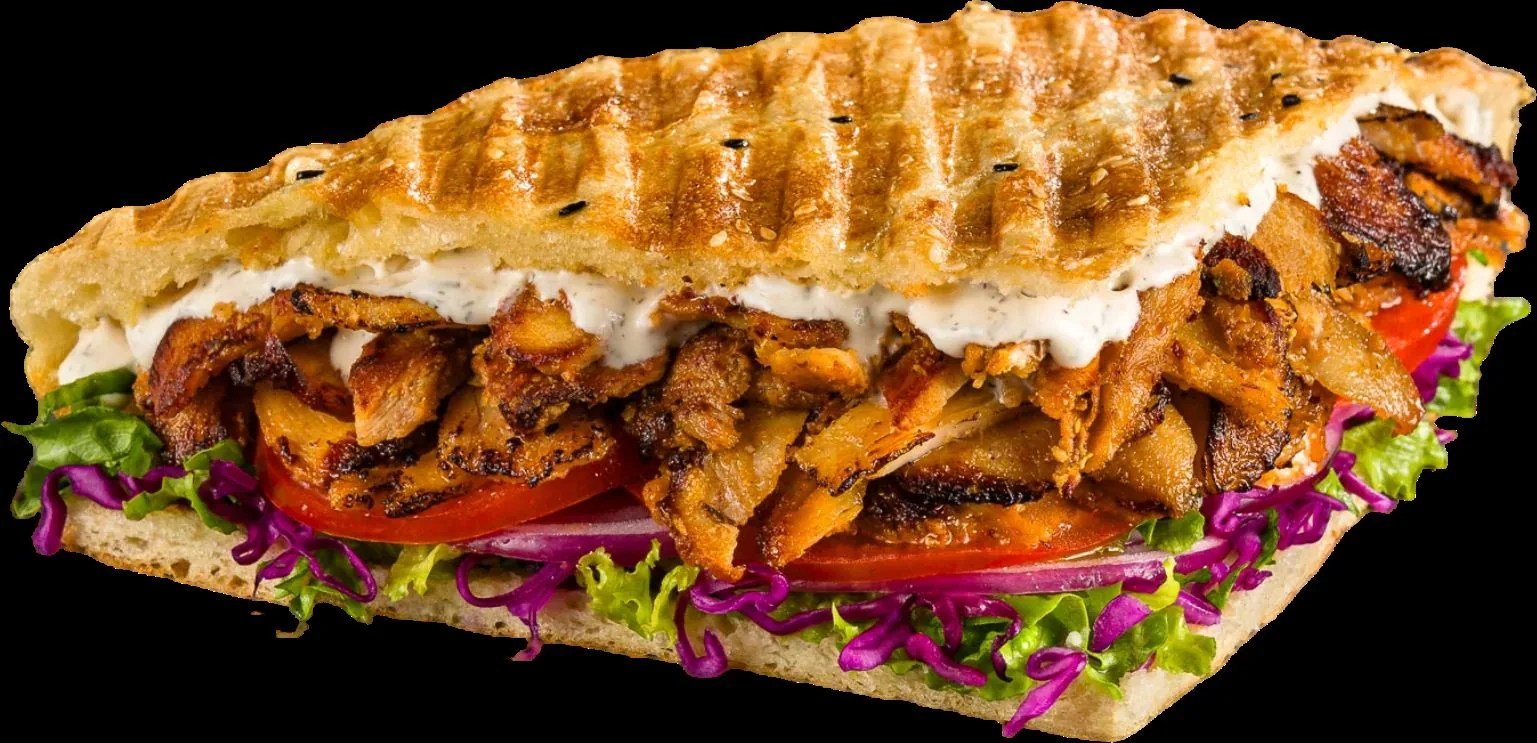
GDK USA’s August 2026 menu describes beef or chicken with red cabbage and sauces in toasted sesame bread. That differs from the pictured Oklahoma gyro’s soft pita, tomato, onion, and tzatziki. Neither example represents every shop. Together they show how far bread, salad, and sauce can travel from a shared spit.
A second döner reference point makes the pattern clearer than one operator can. Kotti Berliner Döner Kebab’s August 2026 menu lists chicken, beef or a vegan protein in toasty Turkish pide, with crisp lettuce, red cabbage dressed in lemon, tomato with cucumber and dill, crumbled feta, and its own white and red sauces. Those toppings are döner-shop details; gyro counters in the same city typically build around pita and tzatziki.
Where the words drift
The comparison is harder in the United States than in either Germany or Greece, because the two names are often used by the same business. A menu line reading “gyro / kebab” may reflect a kitchen that runs both and does not consider the distinction worth explaining. That line also leaves the bread and sauce unspecified.
A specialist menu usually names the bread and sauce. A combined listing leaves those unspecified until the item itself does.
Gyro usually means a Greek menu; in the US, beef-and-lamb cones are common, so the meat still needs checking. German döner usually appears on a menu that names döner and describes the bread, cabbage or salad, and sauce set. Allergen status comes from the ingredient information for the specific cone. Style names do not establish whether wheat, milk, or soy is present.
Read the longer three-way comparison in the Döner Guide or see is the meat gluten-free.
Related questions
What's the difference between a döner and a gyro?
A Greek gyro is oregano, soft pita, and tzatziki. The German döner uses a milder seasoning, toasted flatbread, far more vegetables, and a yogurt-chili mix rather than tzatziki.