What is an imbiss?
Short answer
An Imbiss is a German snack bar or stand for quick food — a window, kiosk, or small counter, sometimes with limited seating. Döner is a common imbiss item, not the only one.
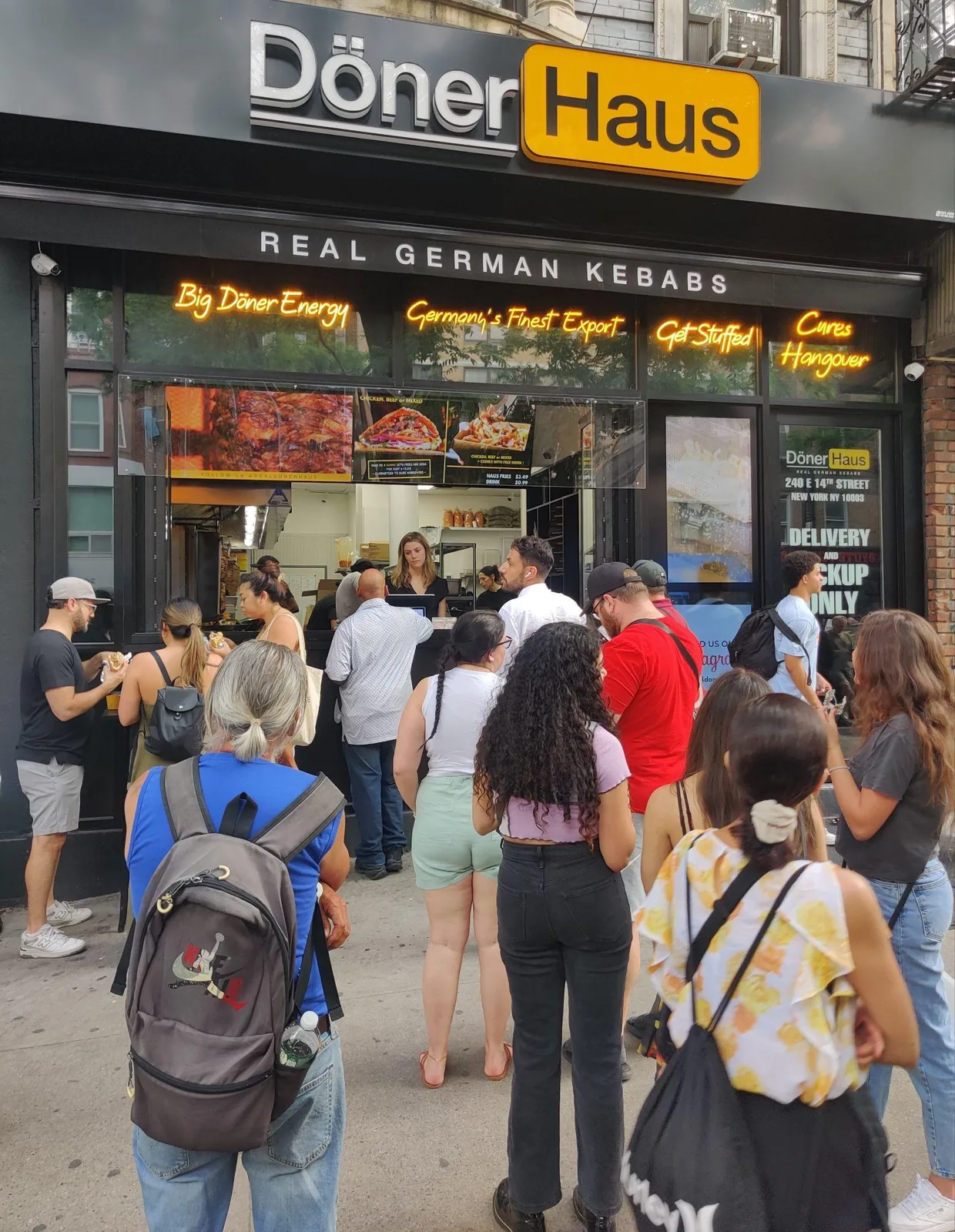
An Imbiss is a small meal and, by extension, a place selling quick food. In everyday English, “snack bar,” “snack stand,” or “takeaway counter” is usually closer than “restaurant.” Duden defines Imbiss as a small meal and Schnellimbiss as a quick-service establishment offering one.
The word covers more than döner: currywurst stands, sausage counters, fried-food shops, kiosks, and small takeaways can all be Imbisse. Some have only a service window; others have stools, high tables, or a modest dining area. “No seats” is common, not a definition.
Why the format suits döner
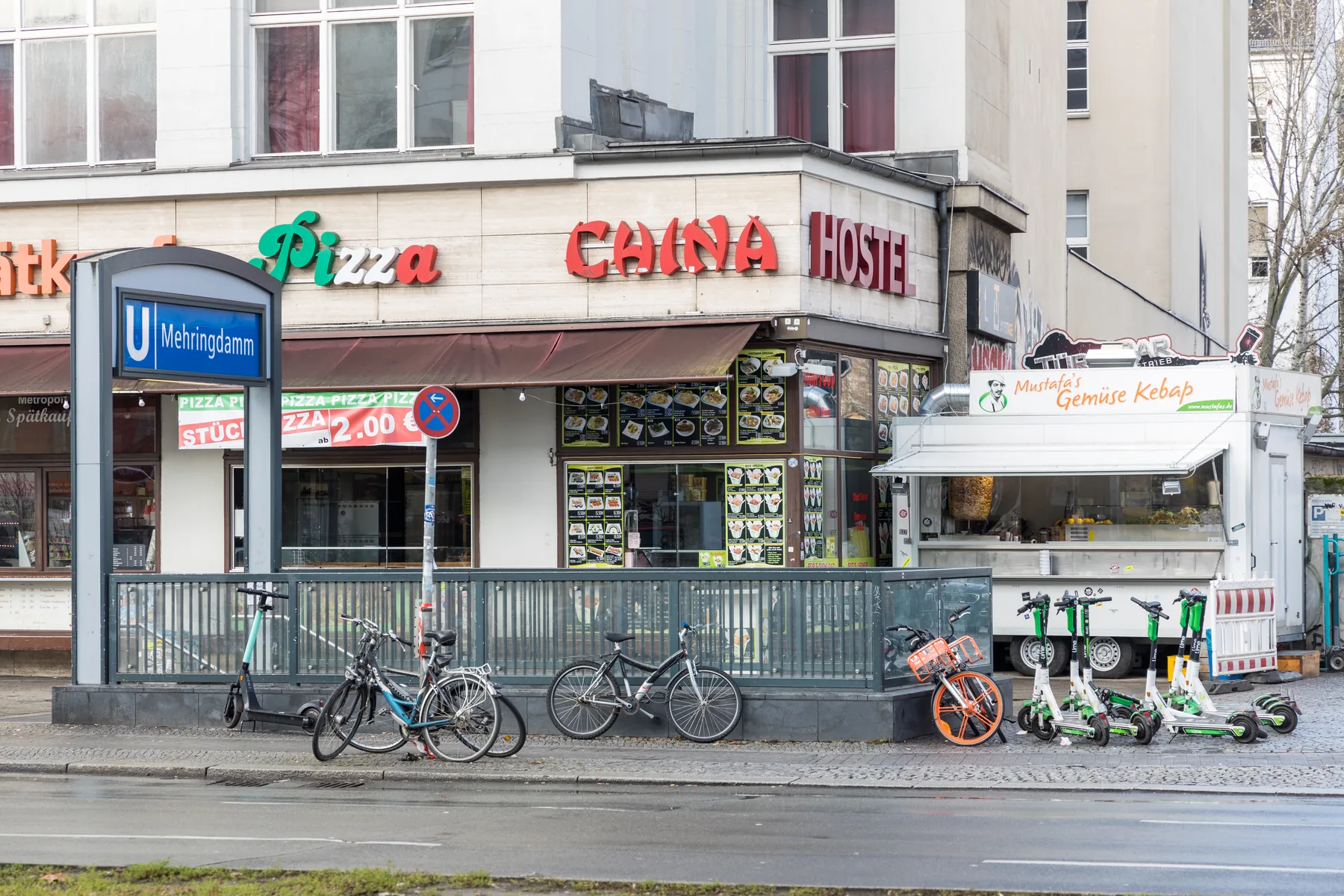
A vertical spit, cutting station, bread, salad, and sauces can support food assembled to order at a counter. Takeaway reduces the space and service required for a dining room. Berlin’s official visitor guide includes early snack counters such as Lale Imbiss, while Mustafa’s official site describes its Mehringdamm location as to-go with a frequent queue.
Seated döner shops are still döner shops. Turkish restaurants may serve döner on plates; US operators may use malls, food halls, or fast-casual dining rooms. Imbiss describes a service format.
| What you may see | What it usually means |
|---|---|
| Service window, pavement queue | Classic imbiss pattern |
| Stools or standing tables | Eat here without a dining room |
| Food-hall stall | Shared seating, still counter service |
| Full Turkish restaurant | Plates and tables; still can serve döner |
US “fast casual” overlaps in speed but is an industry box, not a translation. A compact New York counter can feel like an imbiss without using the German word. A mall food court can serve excellent spit meat without resembling a Berlin kiosk.
Expect to order and pay at a counter unless signs say otherwise. Check whether seating belongs to the shop or a shared food hall. If the menu says Teller, expect a plate; Dürüm means a wrap; a standard döner may arrive in bread and paper.
Cash-only windows still exist in Germany; cards are common too. A queue is part of the format. If you need a table, look for Restaurant or visible seats rather than assuming every döner is an imbiss. US compact counters can feel identical without using the German word — Döner Haus’s public New York shops are takeaway-led; GDK’s mall units are still counter service inside a larger building.
See how to eat a German döner and the Döner Guide ordering chapter. For late hours, see is döner late-night food.
An imbiss is a service pattern. Judge the spit and the salad, then decide whether you wanted to stand or sit.
Related questions
Why are many German döner shops small?
Counter service and takeaway reduce the need for a large dining room, though size and seating vary.
Is an imbiss the same as fast casual?
They overlap in speed and counter service, but imbiss is a German everyday term rather than a US restaurant-industry category.