What meat is in döner?
Short answer
Beef, veal, lamb, chicken, turkey, and mixed preparations all appear. The word döner names the turning spit, so the menu and ingredient list decide the animal.
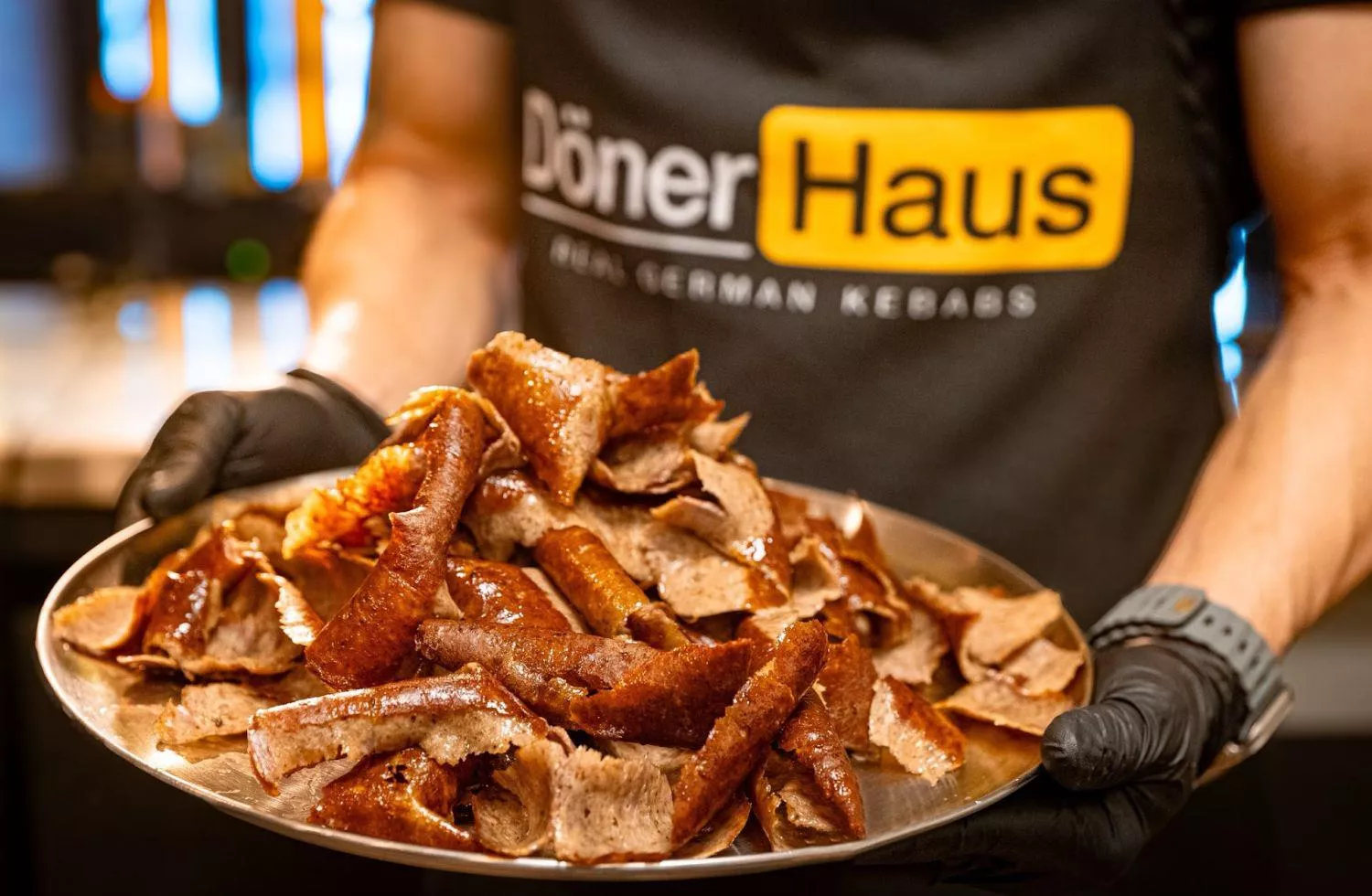
Beef, veal, lamb, chicken, turkey, and mixtures can all appear as döner. The defining action is roasting a stacked cone on a vertical spit and slicing the cooked outer surface. The word names that method; the menu and ingredient list name the animal and the formulation.
Germany is unusually specific. A Bavarian food-control guide explains that the country’s guideline form of beef, veal, lamb, or mutton döner consists of thin meat slices and permits up to 60% minced meat. Chicken or turkey döner uses the named poultry. Products with larger departures or ingredients such as breadcrumbs and soy require more specific labeling in Germany. Those naming rules do not automatically govern a US restaurant menu, so the ingredient list is the document that counts there.
Current menus are not identical
Döner Haus’s public East Village menu offers chicken or beef and says its meat has no fillers. GDK USA’s menu, reviewed August 2026, offers beef, chicken, or mixed döner; its UK allergen page states that beef doner contains poultry for added juiciness. If the board says beef and the cone contains chicken, that is GDK’s product, not a category fact. California’s DonerG describes halal Turkish döner alongside chicken shish and falafel. Each of those is that operator’s current menu.
“Mixed” can mean beef and chicken as two choices combined in one order, or a formulated cone containing more than one species. If species, fillers, or allergens matter, the restaurant should distinguish those meanings and show the current ingredient or allergen information.
| Question | Why it matters |
|---|---|
| Which animal species? | Beef, veal, lamb, chicken, turkey, and mixes all appear |
| Whole-muscle, minced, or both? | German guidelines allow minced meat up to a limit; US menus may not say |
| Wheat, milk, or soy in the cone? | Binders and marinades are separate from the animal name |
| Halal-certified, and for which product? | Species eligibility is not the same as certification |
Chicken, beef, and what “classic” means
People often treat beef or veal as the “classic” Berlin meat and chicken as the later, lighter option. Both are established. Chicken cones are common because they cook differently, cost differently, and suit customers who do not eat red meat. Beef or veal can taste milder or richer depending on the shop’s seasoning and how much minced meat is in the stack. Lamb is less universal on US German-döner menus than many first-time customers expect.
A chicken sandwich in toasted pide with cabbage can still be German-style döner. A lamb plate with rice is still döner, served as a plate rather than the Berlin street sandwich. For a side-by-side of the two most common US choices, see chicken or beef.
Ingredient lists answer the practical questions: which animal; whole-muscle, minced, or both; wheat, milk, or soy in the cone; whether a halal certificate covers the product or the restaurant.
For more on the spit and slicing process, see the Döner Guide’s meat chapter and vertical-spit chapter.
Related questions
Is classic Berlin döner lamb?
Veal, beef, chicken, and lamb all appear. Do not assume lamb from the word kebab.
What does mixed mean?
It can mean beef and chicken combined in one order, or a cone that already contains more than one species. Ask the shop which it is.