Is döner the same as a gyro?
Short answer
No. They share a vertical spit but come from different food traditions. German döner is typically toasted flatbread, more salad, and garlic or chili sauces; a gyro is typically soft pita and tzatziki.
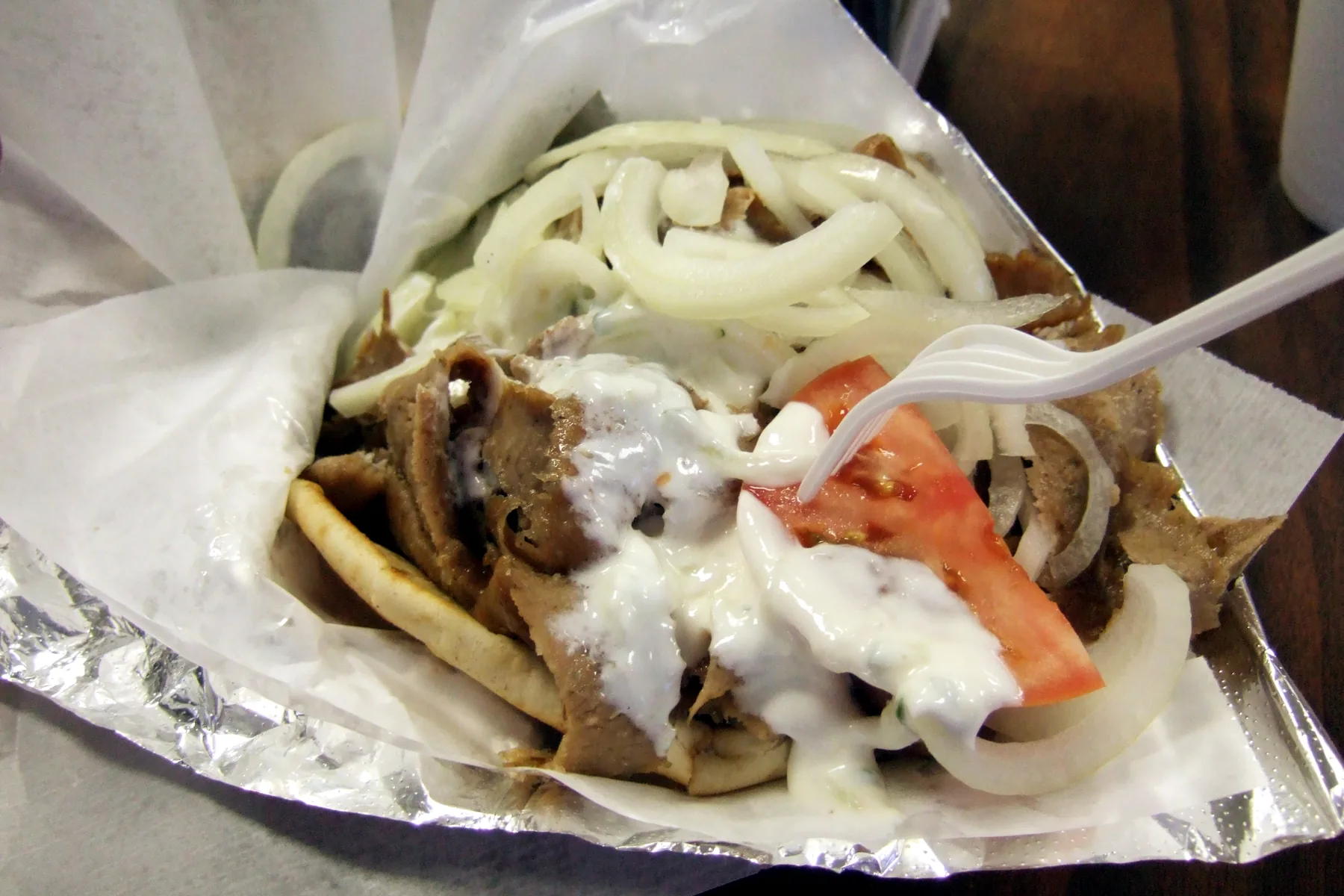
No. They are cousins: stacked meat turning beside heat, sliced as the outside browns. The sandwich you are handed still depends on meat, bread, salad, and sauce.
A Greek gyro commonly uses pork or chicken (in the US, often a formed beef-and-lamb cone), a soft pita, tomato, onion, and tzatziki. German döner commonly uses beef, veal, chicken, or lamb; cut toasted flatbread; cabbage or mixed salad; and garlic, herb, or chili sauces. Munich’s public food-control guide compares döner and gyro composition under German naming practice. A US restaurant may use the words loosely.
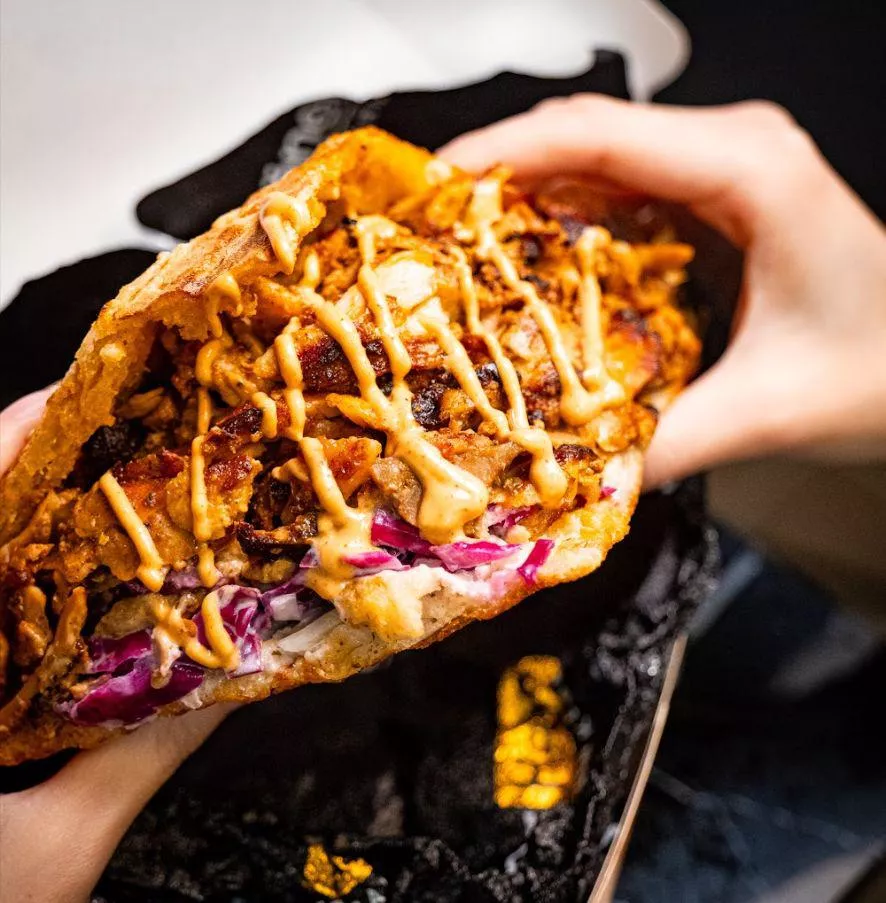
If you only remember one contrast: pita and tzatziki versus toasted pide and cabbage. Everything else is detail, and the detail lives on döner vs gyro, including a comparison table and current US menu examples.
Shawarma is a third tradition, not a tie-breaker. See döner vs shawarma. For the long three-way essay, read the Döner Guide.
Telling them apart from the queue
You do not need the menu. Four things are visible while you wait, and they agree with each other far more often than any single one of them is reliable alone.
- The bread. A soft round folded around the filling points to gyro. A thick loaf cut open, pressed and toasted points to döner.
- The salad. Tomato and onion, used sparingly, is the gyro pattern. A deep load of cabbage and mixed salad is the German one.
- The sauce. A thick, pale, cucumber-flecked sauce is tzatziki. A thinner garlic or yogurt sauce, usually offered next to a red chili sauce, is the döner set.
- The board. Whichever word the shop puts on its own signage is the one it is trying to sell you.
Where those four disagree, believe the bread and the sauce. They are the two the kitchen cannot improvise.
Order gyro when you want the Greek sandwich. Order döner when the shop means döner and the bread and sauces match. If the menu says “gyro/kebab” as one line, ask what you will actually be handed.
US English blurs the words because both come off a vertical rotisserie. A “gyro cone” in a warehouse catalog is not a Berlin recipe. A shop can even serve both, which is useful — you can compare them on the same counter — and confusing if the staff uses the names interchangeably.
Pork gyro is a hard stop for customers who do not eat pork; German döner typically does not use pork, and German labelling practice will not permit the name on a pork product at all, but at a shop selling both you still ask. See is there pork in döner. Halal, gluten, and dairy remain separate questions on both sandwiches. The longer table, Munich naming note, and current menu examples are on döner vs gyro.
If someone tells you they are “basically the same,” they are talking about the machine. Dinner still turns on pita versus pide, tzatziki versus garlic-chili, and pork-or-not versus beef-or-chicken. Shawarma is the third fork in the road: döner vs shawarma.
Related questions
Do they use the same machine?
Both shave meat from a vertical rotisserie. That is the resemblance, not the whole dish.
Where is the longer comparison?
The full table and menu examples are on döner vs gyro.