How many calories in a döner?
Short answer
There is no single calorie number for “a döner.” Bread, meat portion, sauce, cheese, and fries vary so much that only that shop’s current nutrition — or a range — is usable.
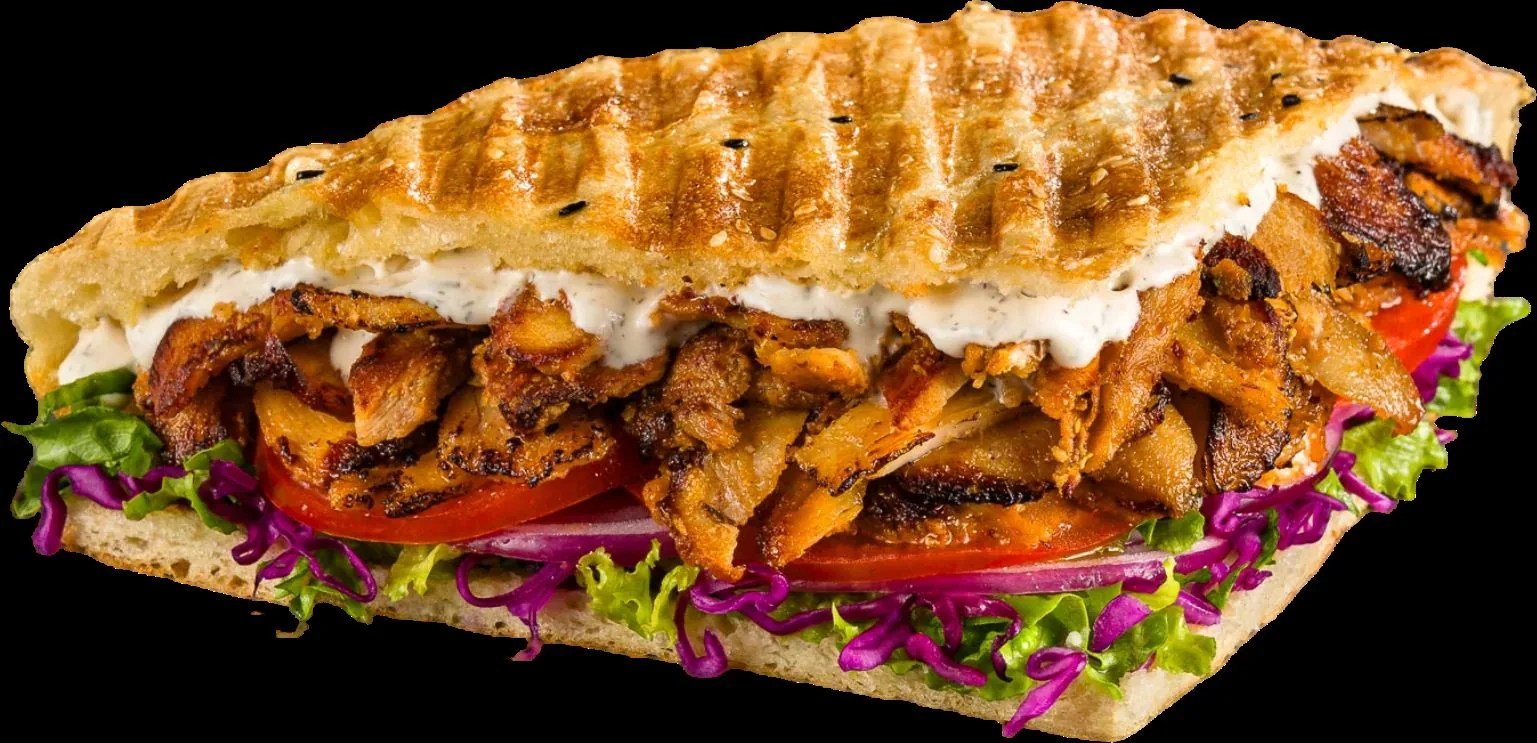
There is no single calorie number for “a döner.” A small chicken wrap and a large beef sandwich with two sauces, cheese, and fries are different meals even though both use meat from a vertical spit.
The largest variables are measurable:
- the weight and composition of the shaved meat;
- the size and recipe of the bread or wrap;
- the amount and oil, egg, or dairy content of the sauces;
- cheese and other add-ons;
- whether fries or rice are inside the item or form the base.
USDA’s FoodData Central documentation explains that its different datasets serve different purposes and that branded foods use label data. That is a reason to select the closest actual product, not to borrow one generic database entry for every shop.
Why one shop’s numbers do not travel
Regional menus themselves differ. GDK USA’s August 2026 menu includes toasted sesame bread, a wholemeal multigrain option, wraps, boxes, rice, fries, and burgers. GDK’s Irish allergen and nutrition page lists item-level nutrition for that market, but those values should not be assigned to a US recipe. Döner Haus’s public US menu describes its items but does not provide a complete nutrition table from which an item total can be stated.
A number from a blog post, a European chain PDF, or another city’s shop does not describe the US sandwich in your hand. “About 800 calories” is a guess.
| What you can do | What you cannot do |
|---|---|
| Use that operator’s current nutrition for that item | Quote a category-wide average |
| Compare two builds on the same menu | Transfer an Irish GDK figure to a US recipe |
| Ask for sauce on the side | Infer calories from the word “healthy” or “Kcal” |
How to estimate a specific order
Use current nutrition published by the restaurant when it exists. Match the location, meat, bread, sauce, and add-ons. If no data exists, any estimate is an estimate: weigh or separately estimate the meat, bread, vegetables, and sauces using comparable database records. Sauce is hard to judge by sight, so a range beats a fake precise total.
A salad base usually removes bread; it does not prove that the meat and sauce portions stayed identical. A fries box may equal or exceed a sandwich depending on serving size. “Kcal” in an item name is a marketing label, not a nutrition panel.
Delivery photos are especially misleading. A tightly wrapped sandwich in a listing image may be a different size from the one in your bag, and the photo cannot show sauce weight. If you are logging food, log the operator, the item name, the meat, and the sauces — or skip the false precision.
Junior sizes, where they exist, are a real control. GDK’s Junior OG is a smaller sandwich on the same August 2026 menu, not a nutrition panel. Ordering sauce on the side is the other control you can actually use without a lab.
Compare options at the same shop rather than comparing unrelated shops. See is döner healthy, what is a döner box, and the deeper Döner Guide calorie chapter.
Related questions
Is a salad box lower calorie?
It usually removes bread, but that does not prove the meat and sauce portions stayed the same. A fries box may equal or exceed a sandwich.
Does extra sauce add a lot?
Creamy garlic or yogurt sauces often add more energy than a thin chile sauce, but only an ingredient list or nutrition panel can say how much.