# Döner vs gyro
Döner and gyro both cook meat on a vertical rotisserie and shave the browned outer layer, but they belong to different food traditions. A Greek gyro commonly uses pork or chicken, soft pita, tomato, onion, and tzatziki. German döner commonly uses beef, veal, lamb, or chicken with cut flatbread, cabbage or mixed salad, and garlic, herb, or chili sauces.
Those are tendencies, not a purity test. Menus adapt by country, and US “gyro” can refer to a formed beef-and-lamb cone unlike pork gyros in Greece. Munich’s public food-control guide compares [döner and gyro composition](https://stadt.muenchen.de/dam/jcr:0bfafc7b-b1ae-470d-8c1b-b77936c181c8/Doener_und_Gyros.pdf) under German naming practice; a US restaurant may use the words differently.
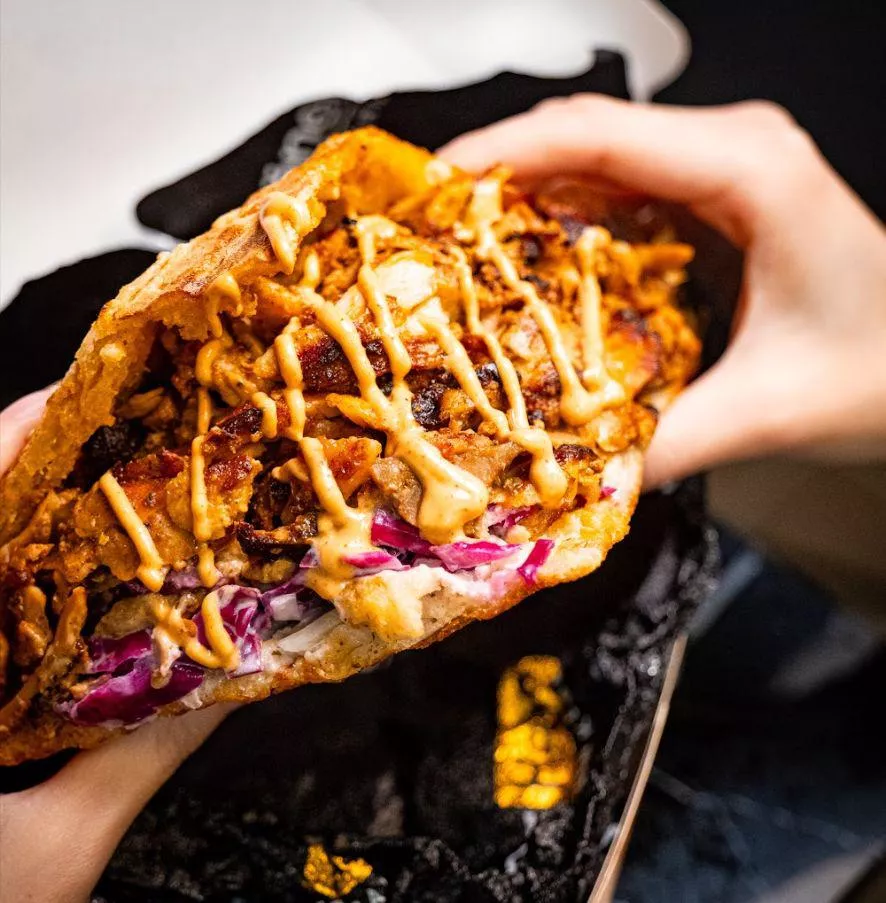
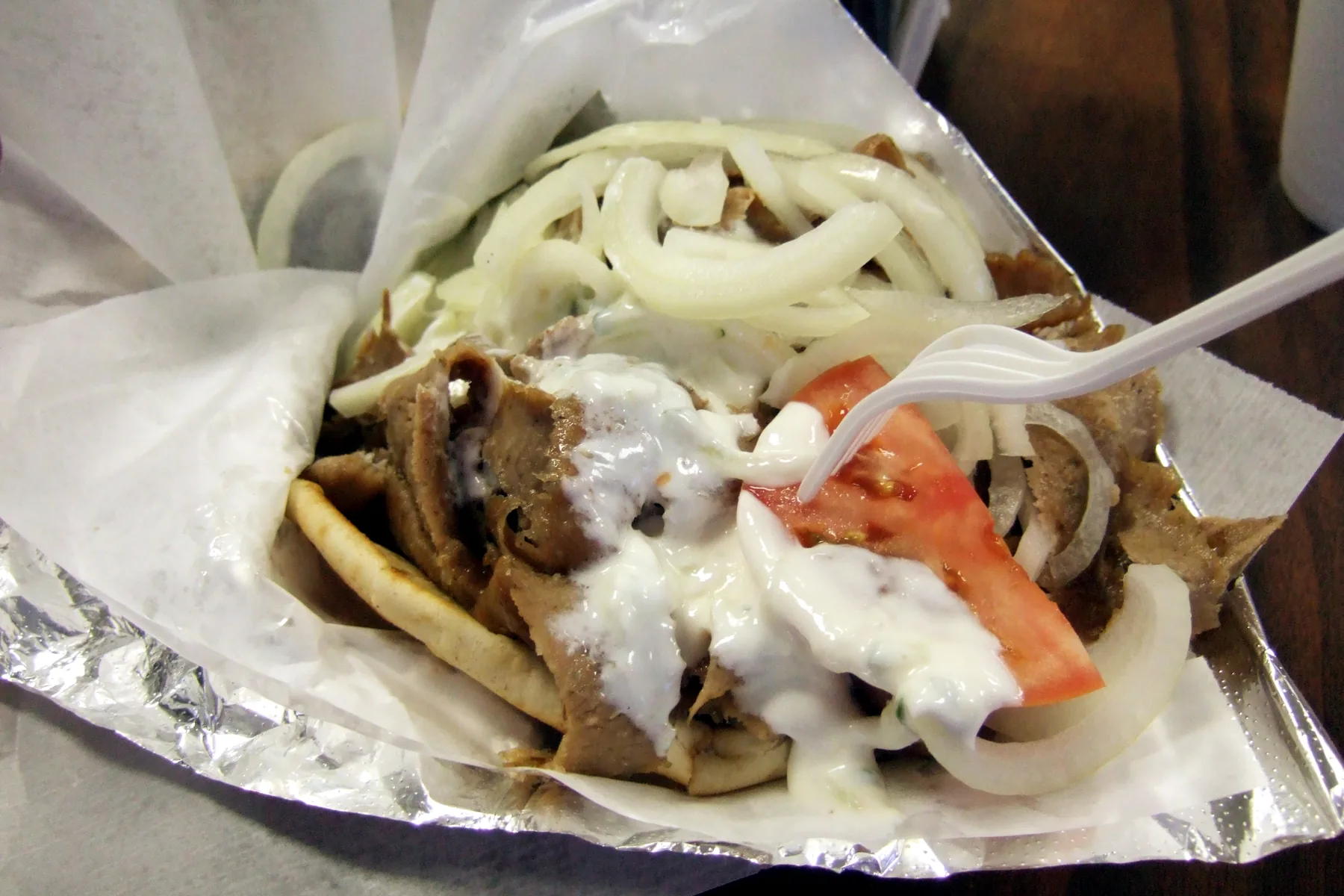
Toasted pide, cabbage, spit meat — not a gyro.This US gyro folds soft pita around meat, tomato, onion, and tzatziki; compare the bread and restrained salad with the stuffed döner above. Photograph by Stephanie D., CC BY-SA 2.0.
| Feature | German döner | Greek gyro |
| --- | --- | --- |
| Food tradition | Turkish-German / Berlin | Greek |
| Meat | Veal, beef, chicken, or lamb | Pork or chicken (often) |
| Typical seasoning | Varies; often savory and less herb-forward | Often oregano and other Greek herbs |
| Bread | Toasted flatbread / fladenbrot | Soft pita |
| Vegetables | Generous: cabbage, lettuce, tomato, onion | Tomato, onion, sometimes fries |
| Sauce | Yogurt-garlic, herb, and chili | Tzatziki |
The distinction
### Gyro is soft pita and tzatziki. Döner is toasted pide and cabbage. {: .display }
Same broad machine, different menu grammar. Bread, meat, salad, and sauce together identify the style more reliably than any one ingredient.
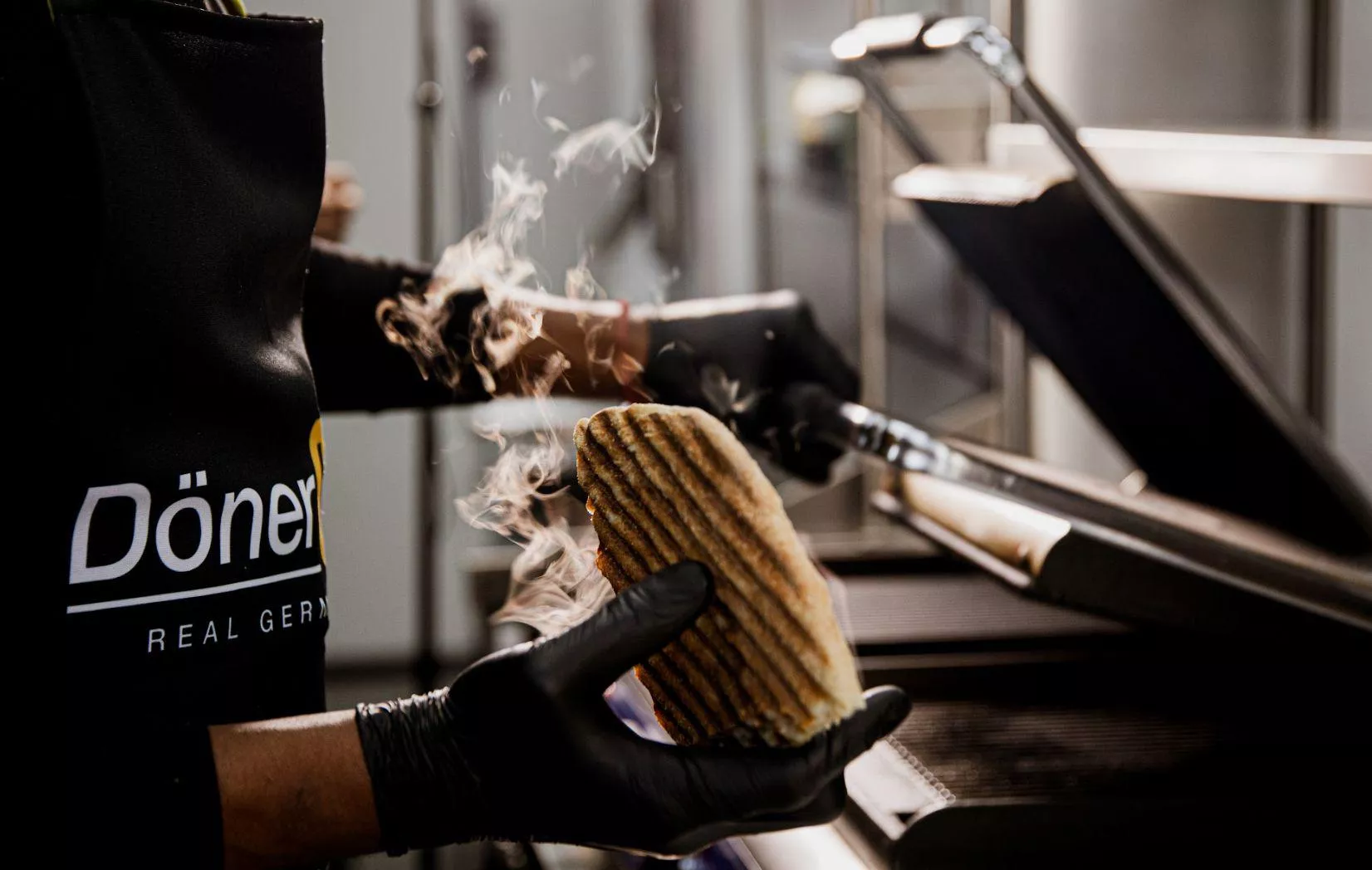
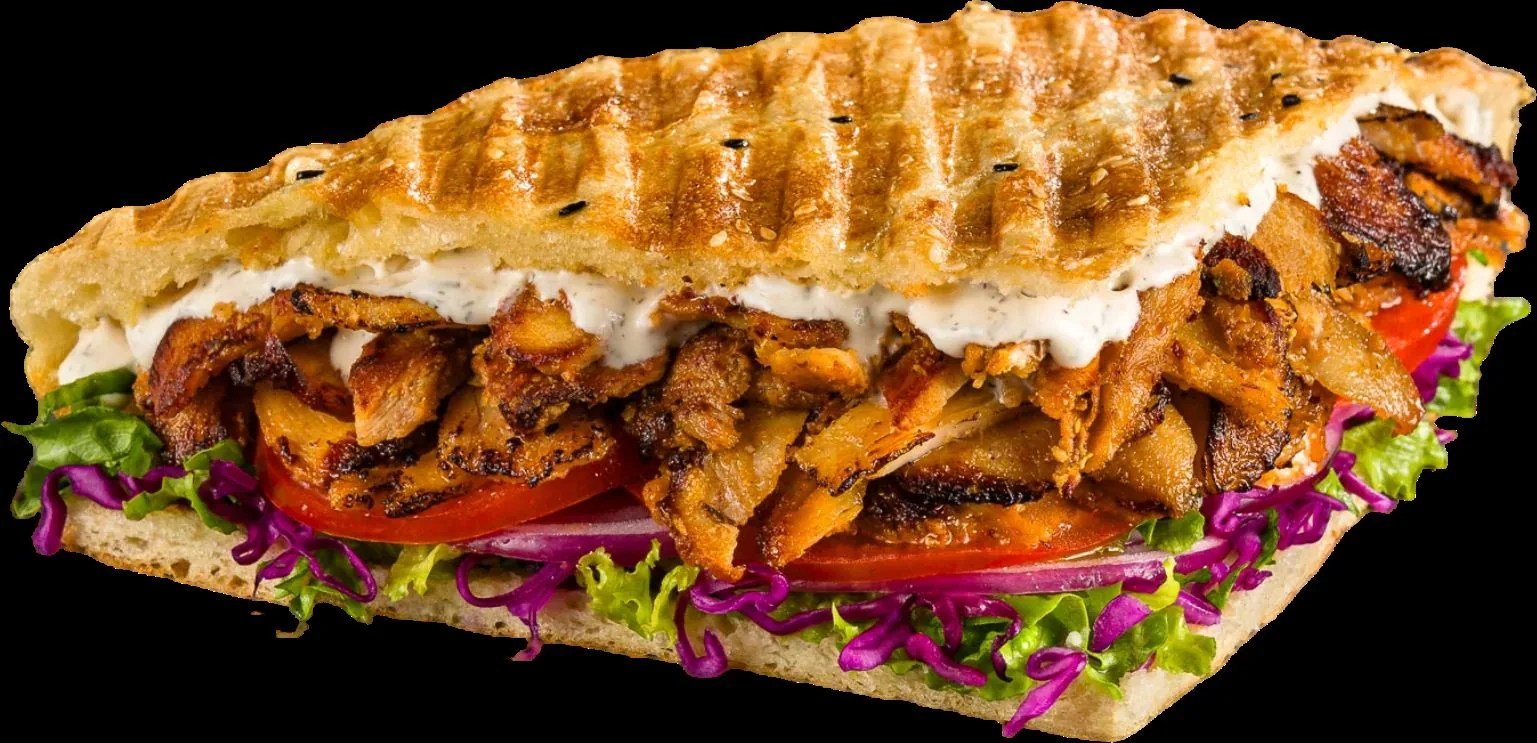
This operator toasts its pide on a contact grill; gyro pita is usually soft and folded rather than cut as a pocket.Cut open, the cabbage and salad take up as much room as the meat.
## Concrete menu examples
[GDK USA’s August 2026 menu](https://gdkusa.com/menu/) describes beef or chicken with red cabbage and sauces in toasted sesame bread. That differs from the pictured Oklahoma gyro’s soft pita, tomato, onion, and tzatziki. Neither example represents every shop, but together they show why “both come from a vertical spit” is not a complete answer.
## Practical takeaway
If you want gyro, expect a Greek menu and ask which meat the shop uses; in the US, beef-and-lamb cones are common. If you want German döner, look for a menu that describes döner explicitly and check the bread, cabbage or salad, and sauce set. For allergies, obtain the ingredient information for the specific cone—style names do not establish whether wheat, milk, or soy is present.
Read the longer three-way comparison in the [Döner Guide](https://donerguide.com/doner-vs-gyro-vs-shawarma/) or see [is the meat gluten-free](/is-the-meat-gluten-free/).
---
HTML: https://whatisdoner.com/doner-vs-gyro/