What is a kapsalon?
Short answer
A Dutch tray of fries layered with kebab meat and melted cheese, then salad, garlic sauce and sambal. It began in Rotterdam in 2003 and is now standard at Dutch takeaways — closely related to a döner box, but not the same thing.
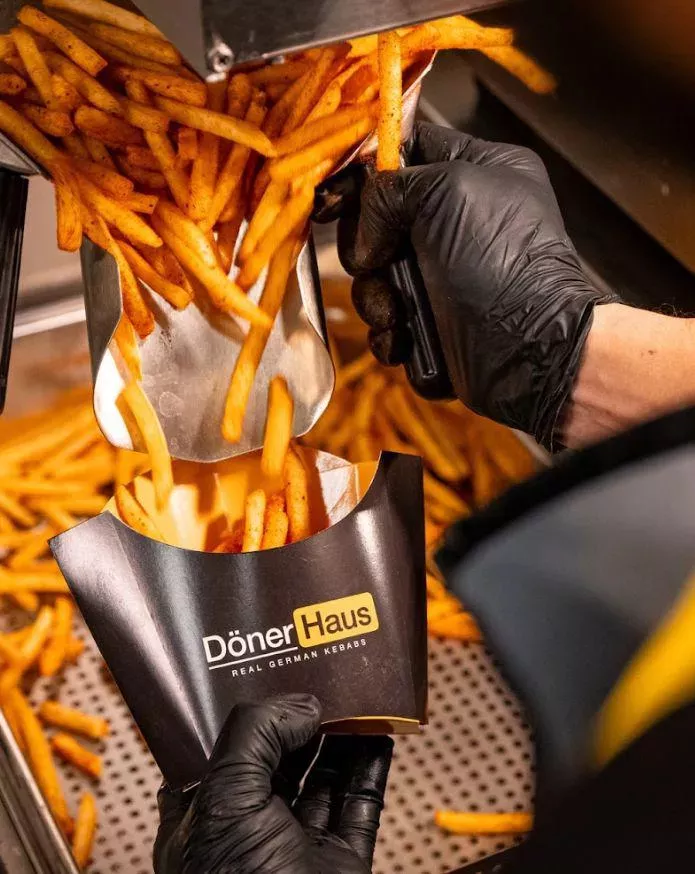
A kapsalon is a Dutch takeaway dish: a foil tray of fries, covered with kebab meat and slices of cheese, put under heat until the cheese melts, then topped with shredded salad, garlic sauce and sambal. It is eaten with a fork, straight from the tray.
The origin is unusually well documented for a snack. The Dutch trade publication Frituurwereld marked the dish’s twentieth anniversary in February 2023, placing its invention in 2003 at El Aviva, a shoarma shop on the Schiedamseweg in Rotterdam’s Delfshaven district. A hairdresser working nearby, Nataniël Tati Gomes, took to ordering shoarma and fries layered together in a tray; the staff came to know it as the order for the kapsalon — the hair salon — and two years later it went onto the menu under that name. The article describes the settled version as layers of fries, shoarma meat, lettuce, cucumber, tomato, melted cheese and sauces, specifically garlic sauce and sambal, in an aluminium tray.
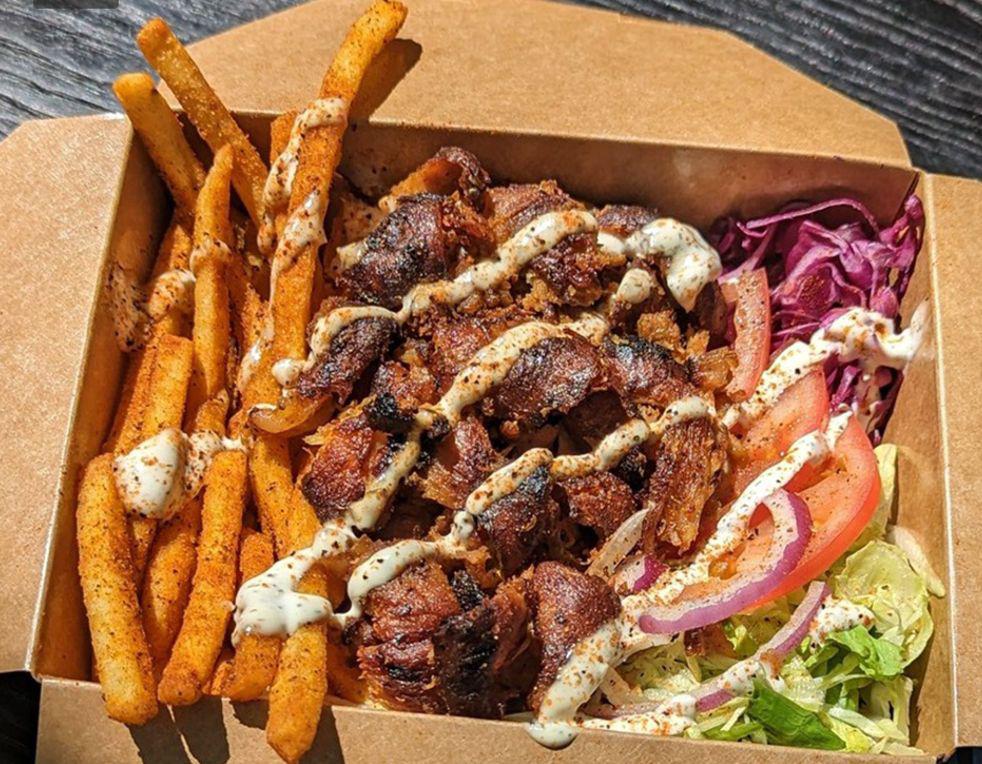
How it differs from a döner box
| Kapsalon | German döner box | |
|---|---|---|
| Base | Fries, always | Fries, salad or rice |
| Cheese | A melted layer, integral | An optional add-on where offered |
| Sauces | Garlic sauce and sambal | Yogurt or garlic, plus a chili sauce |
| Meat | Shoarma, döner or chicken depending on the shop | Whatever cones the shop turns |
| Vessel | Foil tray, under the grill | Takeaway box, assembled cold onto hot fries |
The meat is the part that moves. The dish began with shoarma, and plenty of Dutch shops now build it with döner meat or chicken instead; Has Döner, a Dutch chain whose site lists kapsalons as one of its main menu categories, is one example of a döner-led operator selling it. Frituurwereld also notes that El Aviva itself now runs a long list of variations, from a children’s portion to a jumbo with extra fries and meat. None of that is a definition — it is a dish that spread by imitation, so the local version is whatever the local shop does.
If you see kapsalon on a Dutch menu, expect a substantial fork meal rather than a side, and expect cheese unless you ask otherwise. If you are avoiding dairy, this is not the dish to negotiate down — the cheese is the point of it; see does döner contain dairy.
If what you actually want is the German fork version of a döner, order a box: same idea, different accent. See what is a döner box and what is a döner plate.
The closest relative outside Europe is Australia’s halal snack pack, which arrives at chips, kebab meat, cheese and sauce from an entirely separate direction.
Related questions
Why is it named after a hairdressing salon?
Because a hairdresser working near the Rotterdam shop that first made it kept ordering it, and the staff called it by his trade.
Is it the same as a döner box?
Not quite. The melted cheese layer and the garlic-and-sambal pairing are what make a kapsalon Dutch rather than German.