Is döner street food?
Short answer
By origin and by design, yes: it was built to be carried and eaten standing. As a description of where you will buy it today, only sometimes — operators sell the same sandwich in dining rooms, food halls and malls.
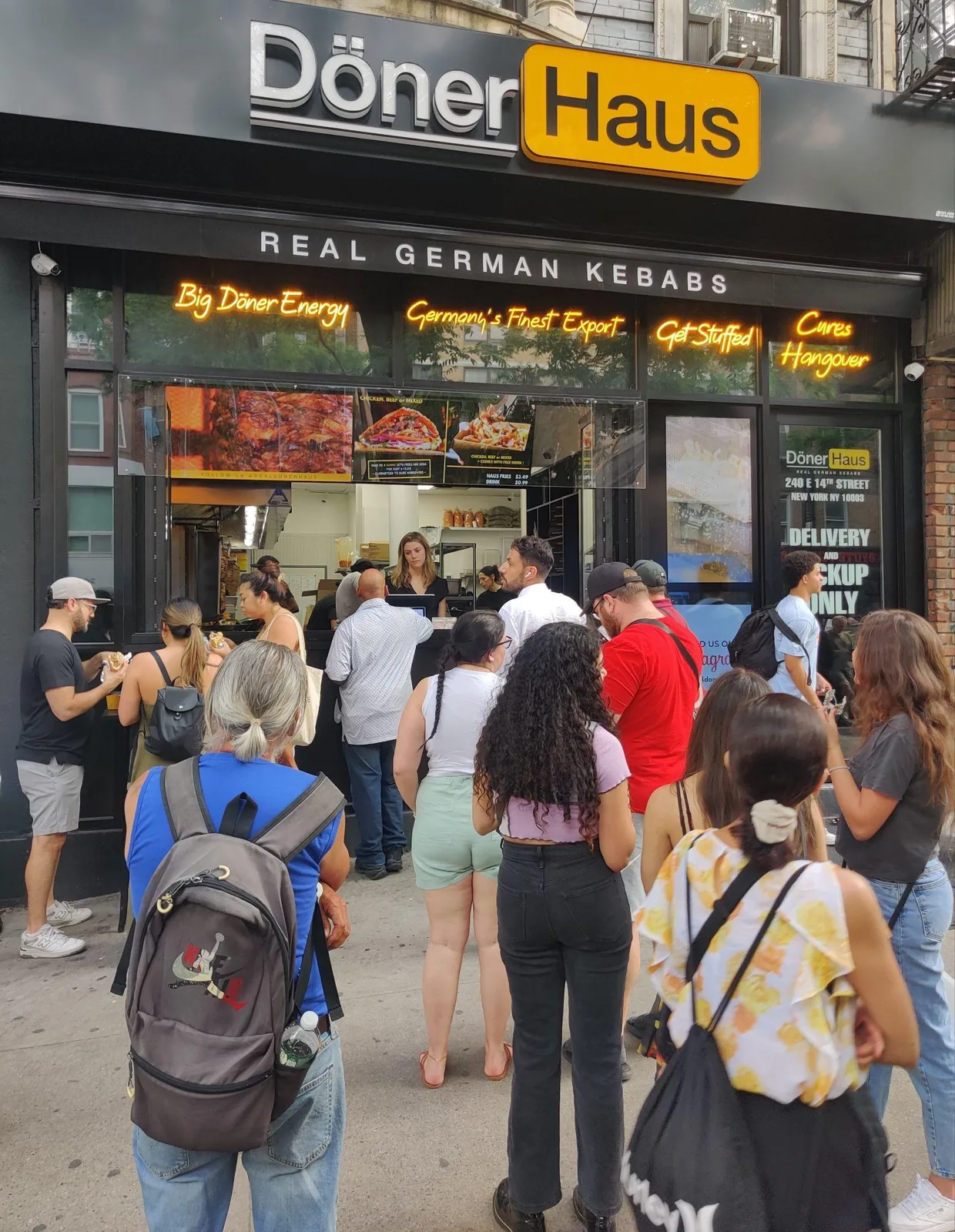
Yes as a description of what the food is for, and only partly as a description of where you will buy it. The Berlin sandwich was designed to be handed over a counter and eaten on the move: bread that closes around the filling, paper that acts as a handle, nothing that needs cutting. Berlin’s official visitor site describes the city’s döner as a flatbread pocket of meat, salad and sauce, presents the city as Germany’s home of street food, and lists the snack stands and kebab houses that sell it.
What has changed is the retail. In August 2026, DonerG described itself as serving Turkish street food while operating six California restaurants in a fast-casual format. German Doner Kebab’s own site markets the opposite of a pavement queue — “nothing beats a dine-in doner,” with a stool, booth or table, on its allergen and country page. Kotti Berliner Döner Kebab sells the same fillings across sandwiches, wraps and bowls, including from food-hall stalls. Three operators, three answers, none of which redefines the dish.
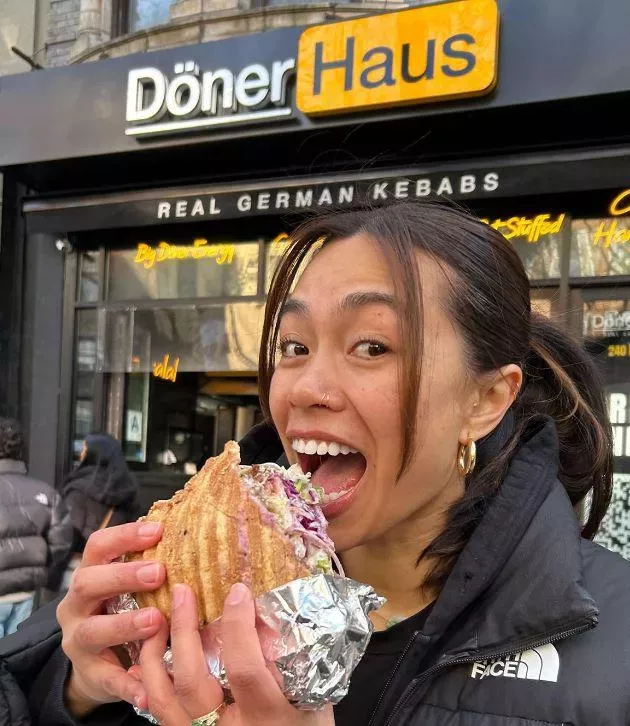
Two different claims people are making
| The claim | Is it true? |
|---|---|
| “It was designed as portable food” | Yes — the bread and wrapper exist for that |
| “Real döner is only sold from kiosks” | No — plated döner is long-established in Turkey |
| “Street food means cheap” | No; price follows the city and the shop |
| “Street food means late” | No; hours follow the neighbourhood |
| “A dining room makes it inauthentic” | No; it makes it a different service model |
“Street food” also shows up as marketing. Operators in air-conditioned rooms with seating and table numbers still use it to point at the dish’s heritage — lineage, not a description of the room.
There is a practical corner where the answer genuinely matters. A vertical spit needs a fixed power supply, a hood and space to work beside, which is why döner is far more common from a permanent counter than from a truck or a market stall. Where you do find it at a stall, the meat has often been cooked and shaved elsewhere. That is a real difference from meat shaved to order in front of you.
“Street food” describes how the sandwich is built. Standing or sitting is a separate choice.
For the shop formats themselves, see what is an imbiss and what is a kebab shop. For eating it upright without wearing it, see how do you eat a döner.
Related questions
Does eating it at a table make it less authentic?
No. Turkish restaurants have served döner on plates for as long as kiosks have served it in bread.
Is it a food-truck dish?
It can be, but a vertical spit needs power and a place to stand, so fixed counters are far more common than trucks.