FAQ
Short answer
Short answers on German döner — what it is, how it differs from gyro and shawarma, bread, sauces, allergens, and where to find it — with a link to the full page for each question.
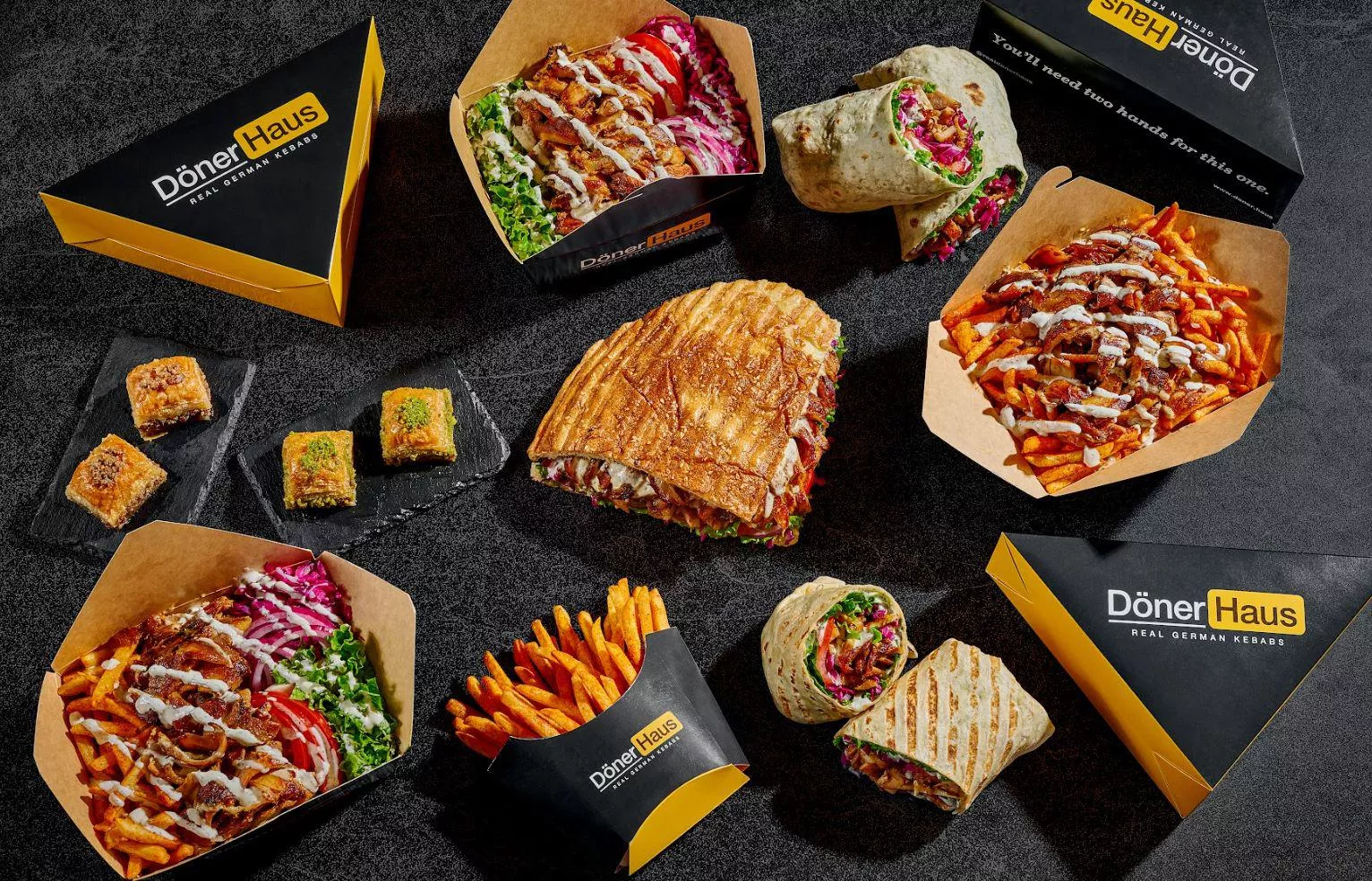
What is it? A German döner is the Berlin-style version of the Turkish döner kebab: seasoned meat stacked on a vertical rotisserie, shaved thin, and served in toasted flatbread with crisp vegetables and sauces. Full answer.
What should I order first? The shop’s standard sandwich, everything on it, one creamy sauce, chili on the side. Full answer
What does döner mean? To turn. The meat rotates on a vertical spit. Döner kebab means rotating roasted meat.
Where did it come from? The Berlin format developed among Turkish immigrant entrepreneurs around the early 1970s. The turning-spit method existed earlier in Turkey, and the identity of a single inventor is disputed. Is it Turkish?
Gyro? No. Greek gyro commonly uses soft pita and tzatziki. Döner vs gyro and is it the same as a gyro?
Shawarma? No. Levantine shawarma commonly uses aromatic spices, pickles, tahini, or toum. Döner vs shawarma
Kebab? Döner is the turning-spit kind of kebab; shish and Adana are others. Full answer
Meat? Beef, veal, lamb, chicken, turkey, and mixtures all appear. What meat · Chicken or beef · Mixed döner
Pork? Not normally, and German naming practice does not allow the name on a pork product at all. Full answer
Halal? It can be. Ask what a current certificate covers. Is döner halal?
Gluten-free meat? Only when ingredients and handling support that claim. Conventional bread contains wheat. Full answer
Bread? Often cut pide or fladenbrot; dürüm wraps are common too. What bread · Dürüm vs pide · What is pide?
Sauces? Garlic, yogurt, herb, and chili are common. What sauces · What is white sauce? · Which sauce · Does it have garlic? · What is scharf?
What comes on it, and how big is it? Meat, bread, raw salad, sauce; the portion is the operator’s decision. What comes on it · How big is it
Box or plate? Same fillings on fries, salad, or rice, in a container or on a plate. What is a box · What is a plate · Box vs sandwich
Healthy / calories? It can combine protein, vegetables, and grain. There is no category-wide calorie count. Healthy? · Calories
How do you eat it? Keep the sandwich partly wrapped and use both hands; the box, bowl and plate are fork food. Full answer · Fork or hands
Keeping it? Chill it fast, reheat the meat hot, and expect the salad and bread to suffer. Leftovers · Reheating · Freezing · Eating it cold
Vegetarian / vegan / falafel / halloumi? Some shops offer falafel, halloumi, vegetables, or plant-based patties. Classic döner is meat. Vegetarian · Vegan · Falafel · Halloumi
Dairy / sesame / nuts? Yogurt sauce and cheese are common dairy sources; sesame is common on the bread; nuts are not a standard ingredient. Ask the shop either way. Dairy · Sesame · Nuts
Spicy? Not by default. Chili is usually on request. Is it spicy?
Kids? Heat, portion size, and allergens are the usual limits. Good for kids?
Ayran? A salted yogurt drink, not a default US side. What is ayran?
Cost? Varies by city and shop; check the posted menu. German street prices are not US prices. How much
Late night? Often in German nightlife districts; US hours are local. Late-night food?
Where? Look at the shop’s own location page. US · NYC · Los Angeles · UK · Germany · How many US shops?
Imbiss? Kebab shop? Both names for a small counter built around a spit — German and everyday English. What is an imbiss · What is a kebab shop · Is it street food?
Lahmacun, kapsalon, snack pack? Related items that appear on the same menus. Lahmacun · Kapsalon · Halal snack pack
US franchises? More than one company has filed. Franchise category
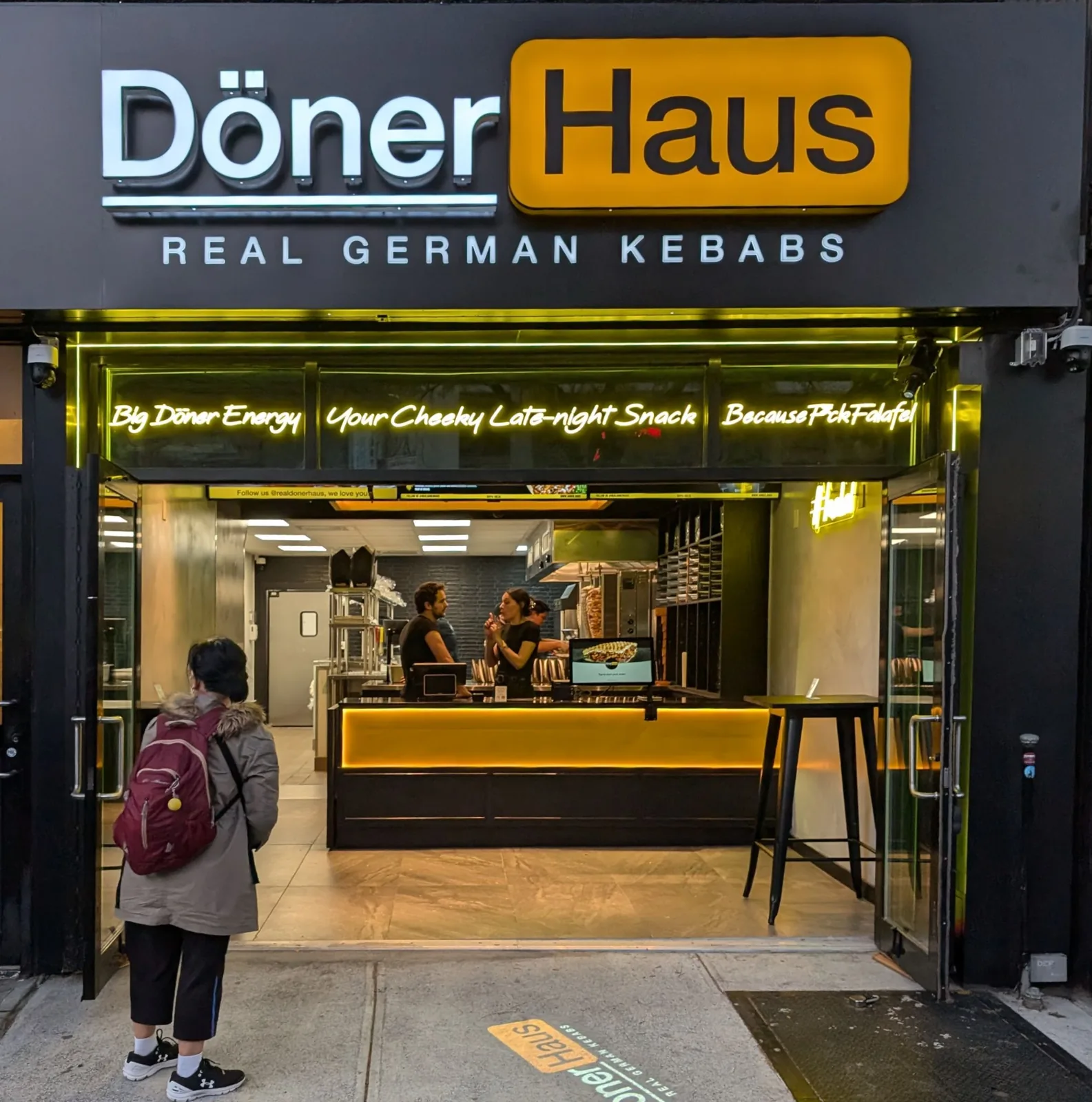
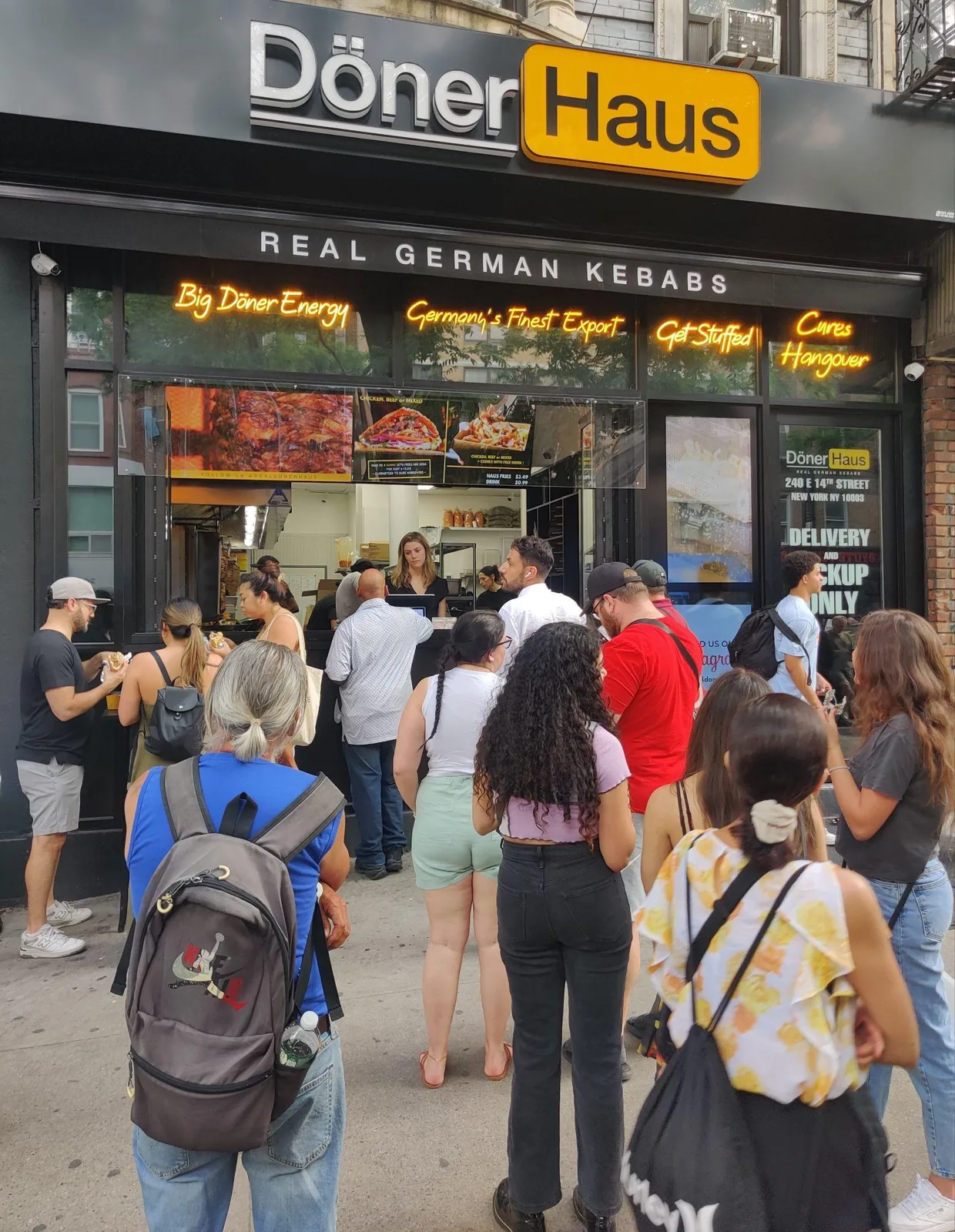
What the shop looks like
Counter service and takeaway. A queue on the pavement.
Counter service and takeaway can support a compact room, but shop size, equipment, staffing, hours, and seating vary by operator and location.
For long-form chapters, use Döner Guide.
Related questions
What is a German döner?
The Turkish-German street-food format associated with 1970s Berlin — spit meat in bread with vegetables and sauce.
Is it a gyro or shawarma?
No. All use vertical-spit meat, but their food traditions, typical seasoning, bread, toppings, and sauces differ.
Where do I start?
Read what a German döner is, then döner vs gyro if that is the confusion you actually have.