What bread is döner served on?
Short answer
German döner is often served in toasted pide or sesame fladenbrot, not a soft gyro pita. A thin dürüm wrap is another established format, and operators choose different loaves.
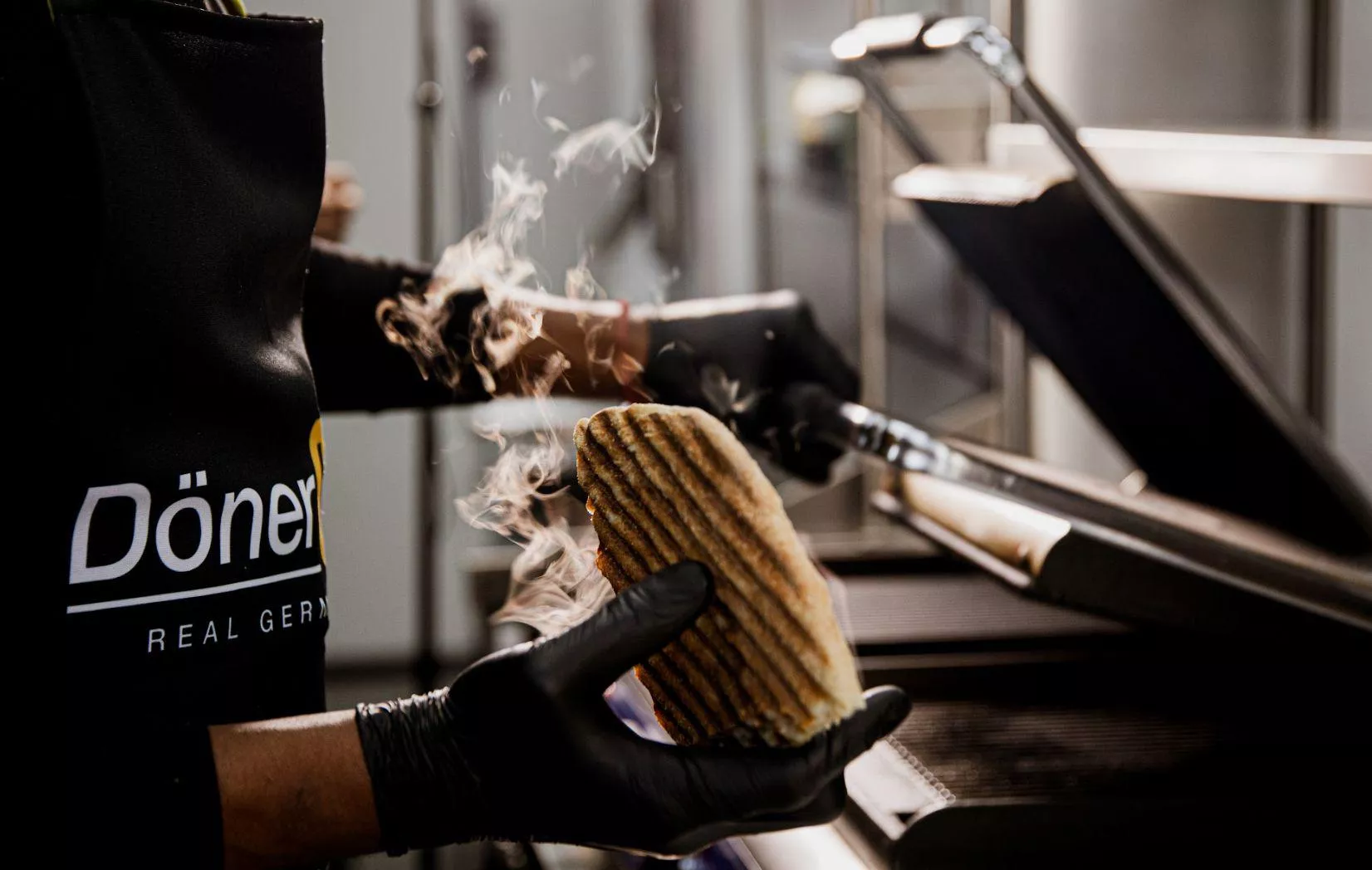
German döner is often served in a quarter of round Turkish-style flatbread—commonly called pide or fladenbrot—that may be sesame-topped and toasted before filling. A thin dürüm or yufka-style wrap is another established format. There is no single mandatory bread across Germany or across operators.
The useful distinction is structural. Pocket-like or cut flatbread holds a large pile of meat and salad; a wrap rolls the same broad family of fillings into a more portable cylinder. “Pita,” “pide,” and “flatbread” are sometimes translated loosely on English menus, so the visible build is often clearer than the label.
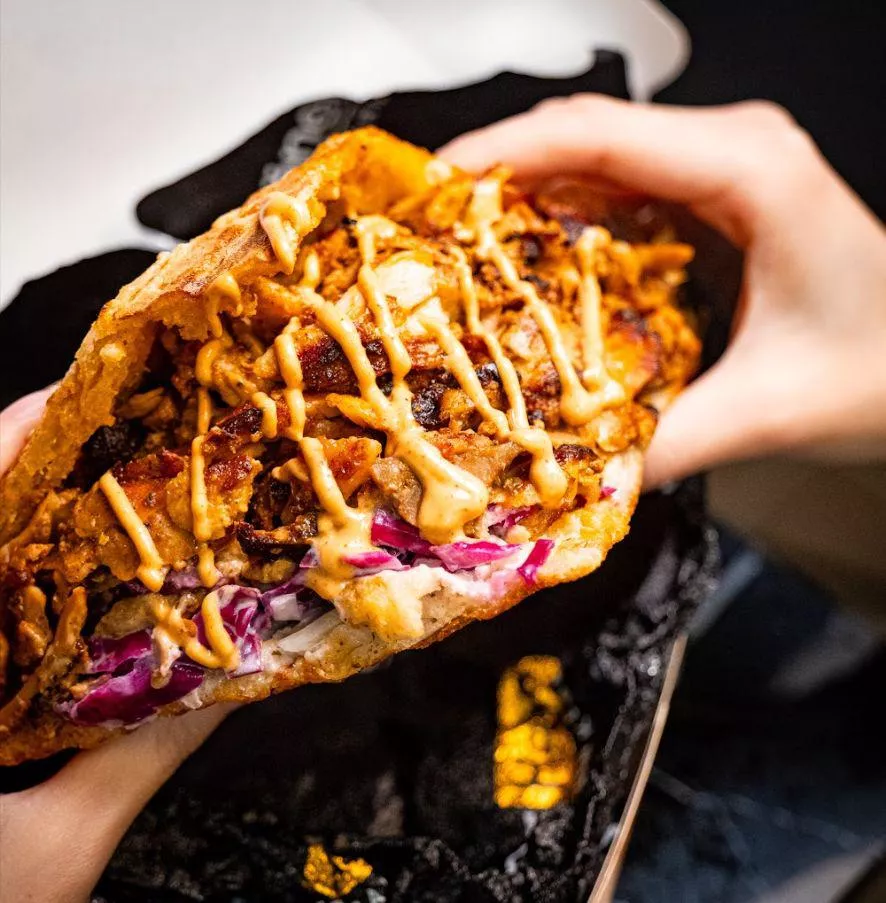
Operators choose different breads
Döner Haus’s August 2026 public menu describes crispy Turkish pide for its sandwich and a grilled tortilla for its wrap — the Berlin pocket, toasted. GDK USA lists handmade toasted sesame waffle bread, a wholemeal multigrain version, and a flatbread wrap. Waffle bread is a UK house loaf. It is not pide, and it is not the sandwich Berlin’s city pages describe.
Berlin’s own city guide uses the English word “pita” for the classic sandwich and dürüm for the wrapped form. That translation covers more than one loaf. What you actually get may be quartered flatbread, soft round pita, thin wrap, fresh loaf, or pressed pocket.
| Carrier | Typical shape | What it does well |
|---|---|---|
| Quartered pide / fladenbrot | Pocket or triangular wedge | Holds a deep salad-and-meat pile |
| Dürüm / yufka wrap | Thin cylinder | Travels neatly; steam can soften it |
| Operator loaf (sesame waffle bread) | Brand-specific | GDK’s UK loaf, not the Berlin pocket |
For a dedicated comparison of the two most common German formats, see dürüm vs pide and what pide is.
Allergens and ordering
Conventional pide, fladenbrot, and dürüm contain wheat, and sesame is common on the bread. A meat or salad item described as gluten-free does not make the sandwich gluten-free. GDK’s current allergen notice warns that gluten and milk are present and that preparation creates cross-contact risk; a US customer should ask the specific restaurant because regional recipes differ.
Bread texture is settled by whether the sandwich bread is cut from a round loaf and toasted, or whether the order comes as a wrap. Gluten or sesame as a safety issue needs current ingredient and cross-contact information; the item name will not supply it.
A toasted pocket leaks less than a cold, floppy one, which is why so many German-style shops hit the bread on a contact grill. Fresh bakery pide without grill marks is still pide. Shops also differ on thickness, whether the loaf is seeded, and whether it is served as a pocket or a roll.
The Döner Guide bread chapter covers pide, fladenbrot, and wraps in more depth.
Related questions
Is pide the same as pita?
English menus sometimes treat them as synonyms. The Berlin sandwich usually uses a cut, toasted flatbread; many gyros use a soft round pita.
Does the bread contain sesame?
Often yes on the loaf. Sesame is a major allergen, so ask if the topping matters to you.