Where can I get German döner in Germany?
Short answer
Almost everywhere people live and move — döner is everyday German quick food. Look for a local imbiss or Turkish restaurant and read that counter’s board.
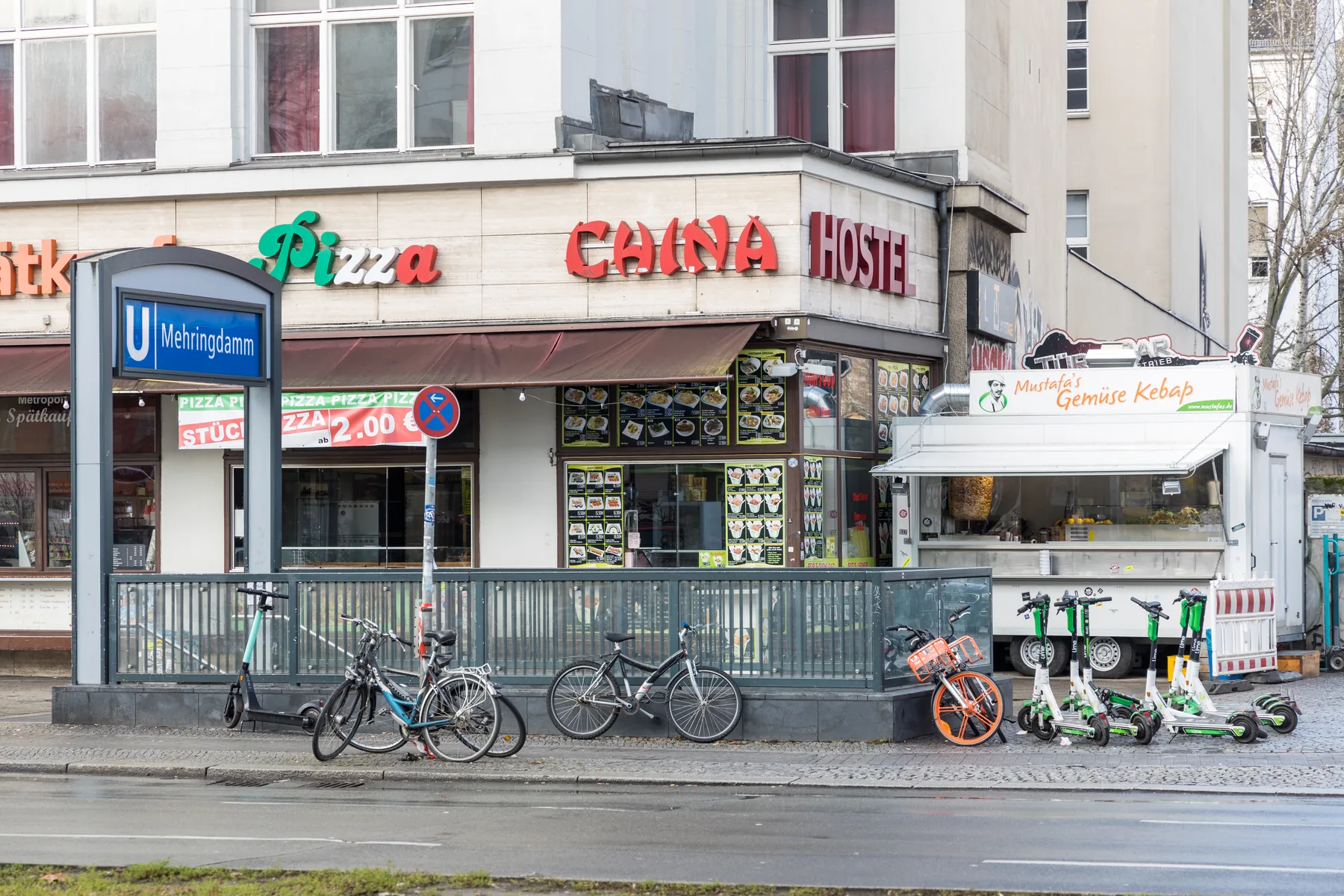
In Germany, döner is ordinary counter food in cities, towns, stations, and industrial parks. Berlin is where the salad-and-sauce sandwich became famous; you can eat one well outside the city.
The Berlin-based trade association ATDID currently claims about €2.4 billion in annual German sales. That is an industry estimate, not a government market census or a shop count. Germany’s statistical office tracks food and restaurant prices, not a national döner shop register.
How to find a shop once you are there
- Follow Döner, Imbiss, or Kebap on the street, then look at the spit.
- Berlin’s official visitor material treats döner as everyday food and lists snack counters; visitberlin.de is a tourist starting point, not every shop in the city.
- A Dönerteller is a plate; a Dürüm is a wrap; a Box is the fork container. See what is an imbiss.
- Hours vary. Nightlife streets run later; residential counters may close in the evening.
| You want | Ask for |
|---|---|
| The postcard sandwich | Döner im Brot, often with salad and sauce |
| A wrap | Dürüm / Yufka |
| A plate | Dönerteller |
| Less heat | Nicht scharf |
| Everything on it | Mit allem — then ask what “everything” is |
Quality varies the way pizza quality varies. A queue can mean a good shop or a drunk Saturday. Judge the spit, the bread, and whether the salad is actually fresh.
You do not need a branded US-style locator to eat döner in Germany. You need a neighborhood and a look at the cone. For the sandwich’s history, read the Döner Guide Berlin chapter and how Germans eat döner.
Regional habits show up in meat and bread more than in the existence of shops. Chicken döner is easy to find. Veal remains a Berlin talking point. Dürüm names shift (Yufka, Rollo in some places). None of that requires a guidebook neighborhood map, though Berlin tourism pages help visitors who want a first stop.
Train stations and Imbiss clusters near them are reliable. If you want a seated Turkish meal, look for a restaurant with plates and dessert, then order döner as one item among many. Both visits are normal German eating. See what is an imbiss.
Mustafa’s is one well-known Berlin stop. Residential corners, supermarket-adjacent counters, and full restaurants all sell döner. The Döner Guide is the longer tour of those occasions.
A neighborhood imbiss is a more typical first German döner than a destination queue, and both are legitimate. Look at the spit either way.
Related questions
Is Berlin the only place for “real” döner?
No. Berlin is the sandwich’s famous home. The food is nationwide.
How many döner shops does Germany have?
Trade groups publish estimates. Those are not a government shop count.