Is döner eaten with a fork?
Short answer
The sandwich is hand food and a fork would fight it. The box, bowl and plate versions are fork food by design. Nobody is judging you either way, and the format you ordered decides more than etiquette does.

The sandwich is eaten with two hands. The box, bowl and plate are eaten with a fork. Construction decides more than etiquette.
A German-style döner sandwich is a quartered loaf, split and packed until the filling is under pressure. Its structural integrity comes from the bread and the paper around it. Put a fork into it and you release the pile you were relying on the bread to hold; the sauce finds the opening, and you have made a plate of ingredients without a plate. Two hands and a partly-on wrapper keep the sandwich in one piece; how do you eat a döner covers the technique in detail.
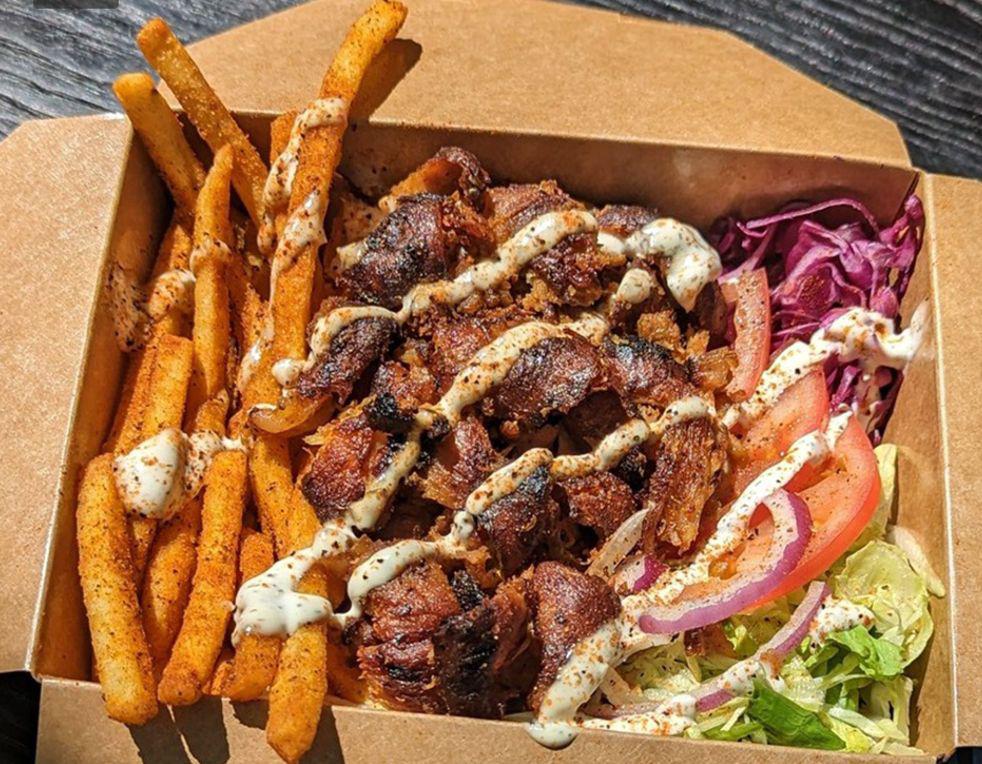
The fork formats are on the menu on purpose
Operators sell a fork version of the same food because plenty of people want one. In August 2026, GDK USA listed several boxes and a rice bowl beside its sandwiches and wraps; Kotti Berliner Döner Kebab offered a salad bowl and a rice bowl using the same proteins and sauces as its pide sandwich; and DonerG describes its döner as served in bowls, wraps or plates. The fork version is a menu item.
| If you want | Order | Cutlery |
|---|---|---|
| To eat while walking | Sandwich or dürüm | Hands, paper on |
| To eat at a desk without wearing it | Box or bowl | Fork |
| A sit-down meal | Plate | Knife and fork |
| To share | Plate or box | Forks, and extra napkins anyway |
Region does shift the default slightly. A Berlin imbiss hands you a wrapped sandwich and expects you to stand; a Turkish restaurant serving a Teller sets a table. See what is an imbiss and what is a döner plate.
Some operators have engineered around the problem rather than picking a side. Kotti’s menu includes a taco-shaped version of its wrap filling, sold explicitly as something to eat quickly in between other things — a smaller handheld with less to manage. Wraps grilled after rolling hold together better one-handed than a cut loaf ever will. Those are design choices about portability, and they are a more reliable route to a tidy meal than technique is.
Match the tool to the format rather than to a rule. If you have a sandwich and no appetite for mess, ask whether the shop will do the same fillings in a box; most that sell both will.
There is one genuinely useful piece of technique for the fork formats: do not stir. Turning a box over mixes the sauce evenly and turns the fries beneath it to mash within a minute. Eat down through the layers instead, and the base stays edible to the bottom.
If you are eating with children, the fork version is usually the calmer choice; see is döner good for kids. If you plan to finish the meal later, the box also travels better than a sandwich does — see leftovers.
Related questions
Is it rude to eat a döner sandwich with a knife and fork?
No, but the cut bread will not cooperate. If you want cutlery, the plate or box version of the same food is easier.
Do shops give you a fork automatically?
With a box, bowl or plate, usually. With a sandwich, usually not. Ask if you want one.