Is döner spicy?
Short answer
Usually not by default. The meat can be seasoned without being chile-hot; heat typically comes from a sauce or flakes you can request, reduce, or skip.
Usually not by default, but it depends on the shop and sauce choice. “Spiced” and “spicy-hot” are different: döner meat can contain aromatic seasoning without producing chile heat.
At many German shops, a customer chooses among garlic, herb, and hot sauces or is asked whether the order should be scharf (hot). Dried chile flakes may be added separately. Other operators build a fixed set of sauces into the item, so the hot component must be removed when ordering.
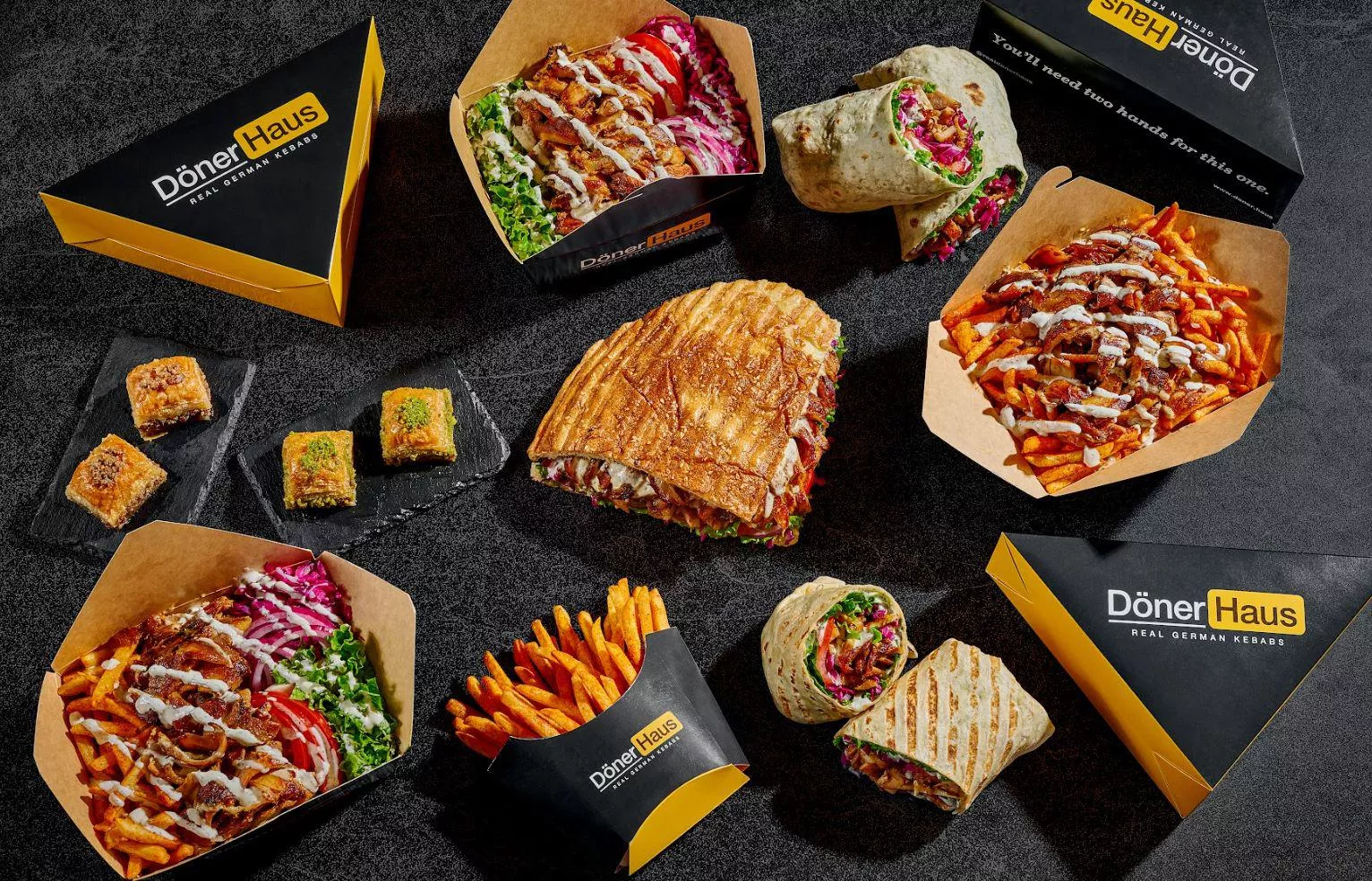
Current US menus illustrate the variation. GDK USA’s August 2026 menu identifies a spicy signature sauce on its Kcal Kebab and lists jalapeños among add-ons, while its original uses three signature sauces. Döner Haus’s East Village menu describes creamy garlic sauce on the standard sandwich. Those are two shops’ defaults, not a heat scale for the whole food.
What can make it hot?
Heat may come from a red chile sauce, pul biber or other dried pepper, fresh jalapeño, or a branded hot sauce. Garlic itself is pungent but not chile-hot. Tahini is sesame-based and not inherently hot; toum is garlic-based and not inherently hot; a white sauce can be mild even when the meat is strongly seasoned.
Cross-cultural menu borrowing makes simplistic rules unreliable. Shawarma is often described as more aromatic, but it may be served without hot sauce. Gyro can receive hot sauce even though tzatziki is cooling. The item description and sauce bottle matter more than the cuisine label.
| German counter phrase | What you are asking |
|---|---|
| Scharf? | Chile heat, yes or no |
| Ein bisschen scharf | A little heat |
| Nicht scharf | No chile finish |
| Welche Soße? | Which sauce, which may or may not be hot |
See what scharf means for the word itself.
If you avoid heat, ask which sauce is spicy and whether it is normally included; request it omitted or served separately. If you want heat, ask for the shop’s chile option by name and start with a small amount. If an allergy is involved, “not spicy” says nothing about milk, egg, sesame, or garlic.
Pul biber (Aleppo-style flakes) is a common German-Turkish shaker: fruity heat rather than a vinegar hot sauce. Jalapeños on a US menu are a different heat and a different texture. “Flaming” seasoning on fries, as on GDK’s August 2026 sides list, can make a mild sandwich feel hot because of the side, not the döner.
If you are splitting an order, put chili on the side so one person is not stuck with a fully scharf sandwich. Children and first-timers should answer no first; you can always add flakes. See is döner good for kids.
Meat that tastes “spicy” without chile is usually salt, pepper, paprika, or garlic. That is seasoning. Scharf is the extra heat you can refuse.
See what sauces go on döner and the deeper Döner Guide sauce chapter.
Related questions
What sauces go on a German döner?
Garlic, herb, yogurt, and chili sauces are common, but recipes vary. Tzatziki is gyro-associated; tahini is shawarma-associated.
Can I get it without chili?
Usually yes. Ask which sauce is hot and whether it is already included, then request it omitted or on the side.