What is a döner plate?
Short answer
A plated meal of the same spit meat and toppings, eaten with a fork instead of held in bread. Rice, salad or fries make the base. “Bowl,” “plate” and the German Teller overlap, and the menu decides what arrives.
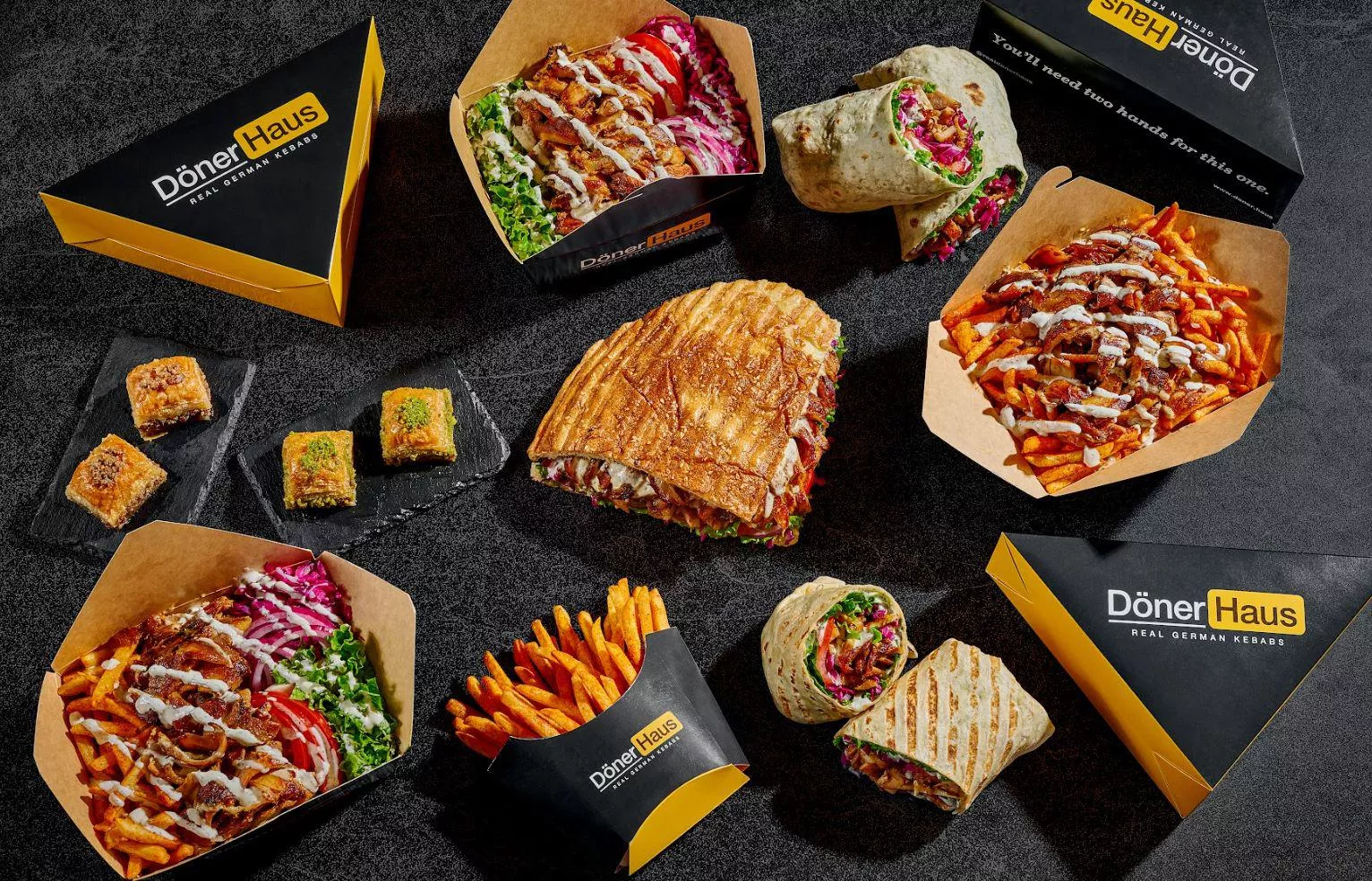
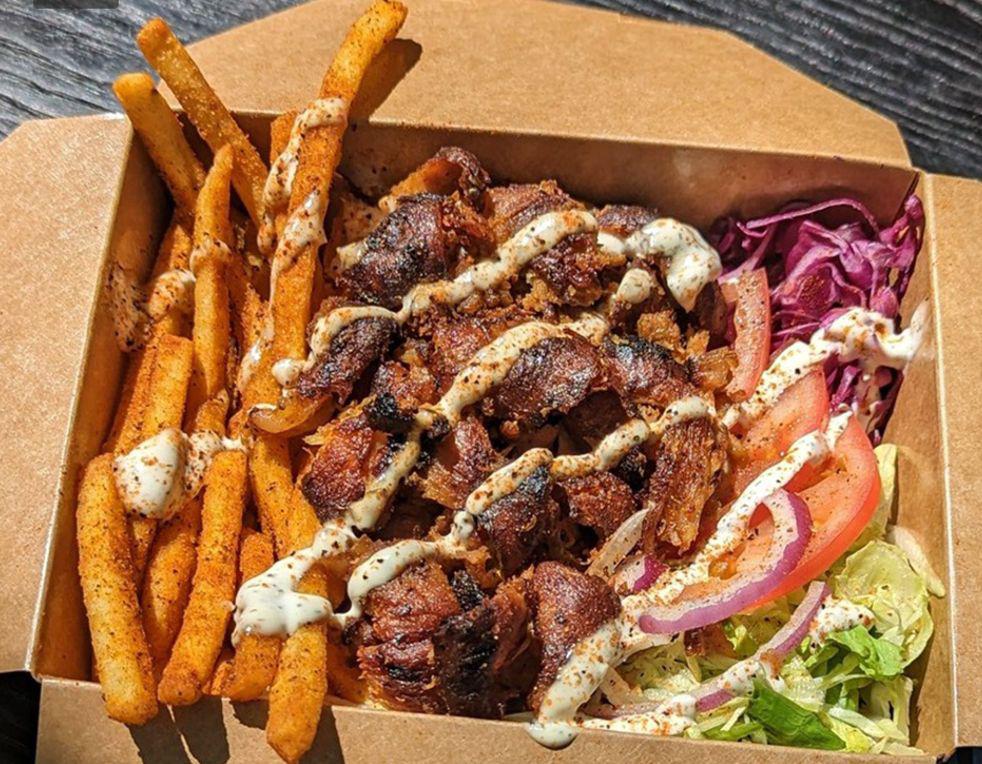
A döner plate is the same shaved meat, salad and sauce you would get in bread, served on a plate with a base underneath and a fork beside it. In German this is a Dönerteller. In American fast-casual English it is usually a bowl. The difference between those words is mostly about the room you eat in, not the food.
Current menus show how loose the vocabulary is. DonerG says its Turkish döner is served in bowls, wraps or plates, and its Istanbowl is built on rice with beef and chicken döner, red cabbage, onions, parsley, shepherd’s salad, falafel and pita bread on the side. Kotti Berliner Döner Kebab sells two bowls, one over mixed greens and one over Turkish rice with sumac, using the same proteins and sauces as its sandwich. The Dutch chain Has Döner lists schotels — plates — as a menu category in their own right, alongside wraps and sandwiches. All three were reviewed in August 2026, and all three are describing their own product rather than a shared standard.
What changes when the bread comes off
| Base | What it is like | What to confirm |
|---|---|---|
| Rice | Closest to a Turkish plated meal | Whether the rice is seasoned, and whether bread comes alongside |
| Salad or greens | Lighter in bulk, not automatically lighter overall | Whether the meat and sauce portions change |
| Fries | The most filling base, and the fastest to soften | Whether it is really a box in a bowl’s clothing |
| Bread on the side | Common on Turkish plates | Whether it is included or charged |
The important point for anyone with a dietary reason to order a plate: removing bread removes bread. It does not remove anything else. The cone, the sauces, the fryer and the shared utensils are unchanged, and a rice or salad base carries its own seasoning and its own handling questions. The site’s gluten page sets out what still needs asking, and it applies to a plate exactly as it does to a sandwich.
Order a plate when you are sitting down, when you want to taste the meat without bread competing with it, or when you want a larger share of salad. Order a sandwich when you are walking. Order a box when you want the plate’s contents to survive a journey.
If the menu offers plate, bowl and box and you cannot tell them apart, ask what the base is and whether bread is included. Those two answers separate them at almost every shop. If the plate arrives as a shared platter rather than a single portion, that is a mixed-grill convention borrowed from a fuller Turkish menu; see what is mixed döner.
For how to eat each format, see is döner eaten with a fork.
Related questions
What is the difference between a plate and a bowl?
Mostly the vessel and the venue. A bowl is the fast-casual name for the same idea; a plate implies table service and often bread on the side.
Is a plate the same as a box?
They share the fork-meal idea. A box is built for takeaway; a plate is built to be eaten where it is served. See the box page.