Is döner the same as kebab?
Short answer
Döner is a kind of kebab — specifically meat roasted on a turning vertical spit. Kebab is the broader family, so a shish, Adana, or köfte plate can be a kebab without being döner.
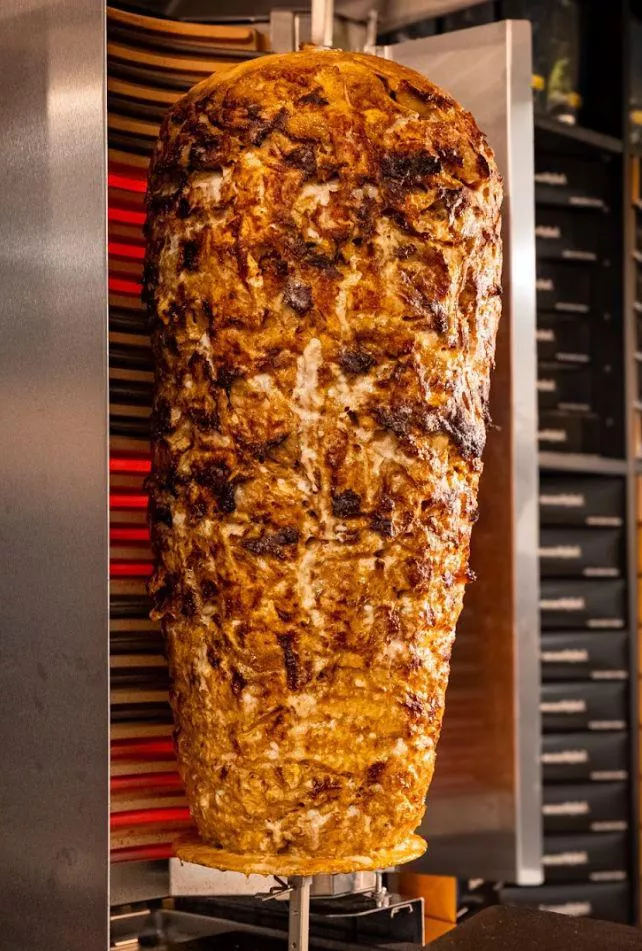
Kebab is a broad family of grilled or roasted preparations. Döner identifies the turning-spit branch: seasoned meat is stacked on a vertical rotisserie, cooked at the outside, and sliced as it turns. Shish kebab uses pieces on a skewer; Adana kebab is a seasoned minced-meat skewer; köfte are formed meat preparations. They can all be kebabs. Döner is the turning-cone method.
German döner is one serving style within that family, usually referring to the bread, salad, and sauce sandwich associated with Berlin. Turkish restaurants also serve döner on rice or as a plated dish. California operator DonerG currently lists wraps, bowls, and plates; GDK USA lists sandwiches, wraps, boxes, rice bowls, and other extensions. The cooking method connects them even when the format changes.
The family
Shish cooks on a skewer. Döner cooks on a cone.
“Kebab” names the broad family; “döner” narrows the cooking method; “German döner” usually narrows the serving style again.
Skewer kebab
Shish, Adana, and other skewered kebabs cook pieces or formed meat over heat on a horizontal skewer.
Not döner
Döner
Seasoned meat stacked vertically, roasted as it turns, and shaved from the cooked face.
The method
German döner
The Turkish-German street sandwich developed in Berlin: shaved meat, bread, vegetables, and sauce.
The sandwich
Why English menus blur the words
English-language menus often use “kebab” as shorthand for the döner sandwich, especially in Britain and Europe. In that context, “a kebab” may indeed mean döner. Elsewhere it might mean a shish plate, kofta, or a broad restaurant category. Read the item description.
The same blurring happens in the other direction. A US shop can call a vertical-spit sandwich a gyro, a wrap, or simply “kebab” without naming döner at all. The useful check is the cooking method plus the build: is meat being shaved from a turning cone, and is it going into toasted flatbread with salad and sauce, into a thin wrap, or onto rice?
Gyro and shawarma also use vertical rotisseries. Their names come from different culinary traditions and imply different typical seasoning, bread, and accompaniments. See döner vs gyro and döner vs shawarma.
| Word on the menu | What it often means | What to confirm |
|---|---|---|
| Döner / doner | Vertical-spit meat | Bread, salad, sauce, and meat species |
| Kebab (UK takeaway) | Often the döner sandwich | Whether it is döner, shish, or mixed grill |
| Shish / Adana | Skewered meat | Not the turning cone |
| Gyro | Greek-style spit sandwich | Pita, tzatziki, and which meat |
| Shawarma | Levantine-style spit wrap | Thin bread, pickles, toum or tahini |
The rotating-spit meat is döner. On a British takeaway menu, “kebab” often means that sandwich; elsewhere it may mean a shish plate. The Berlin-style handheld version comes in bread with salad and sauce. A döner plate or rice bowl uses the same meat in a different format.
For the broader family comparison, read the Döner Guide’s döner, gyro, and shawarma chapter.
Related questions
If a British menu says kebab, is that döner?
Often yes, in Britain “a kebab” commonly means the döner sandwich. Read the item description, because the same word can still mean a shish plate.
Are gyro and shawarma kebabs too?
They belong to related vertical-spit traditions. The names come from different food cultures and imply different typical bread, seasoning, and sauces.