What is a German döner?
Short answer
A German döner is the Berlin-style kebab — meat shaved from a vertical spit, served in toasted flatbread with vegetables and sauce.
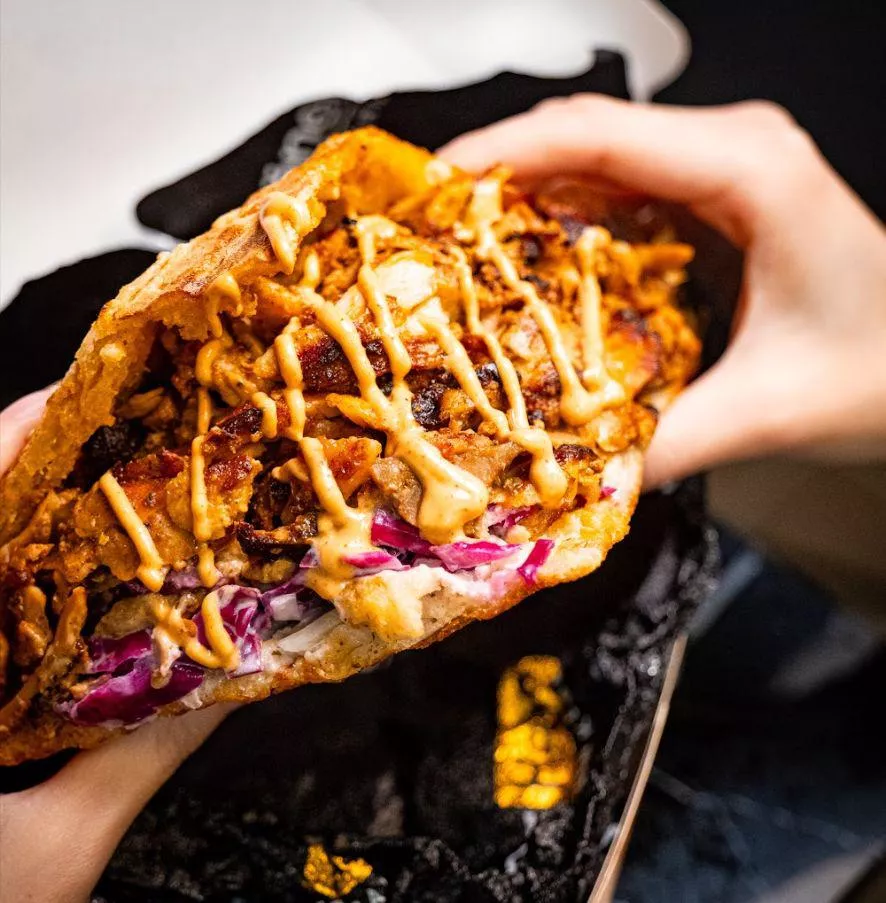
German döner is the Berlin street-food form of Turkish döner kebab: meat roasted on a vertical spit, shaved into bread, and finished with vegetables and sauce. “German” describes the sandwich format that developed in Germany. The cooking machine is the same Turkish vertical spit.
Where did it come from?
The portable sandwich took shape among Turkish immigrant entrepreneurs in Berlin around the early 1970s. Nobody can name a single inventor. A 2022 Die Zeit account quotes food historian Eberhard Seidel saying the dish emerged through interaction between Turkish immigrants and Berlin society, and that the first seller cannot be identified. Berlin’s Museum of European Cultures likewise presents döner as part of the city’s immigrant business history.
Vertical-spit döner and meat served with bread existed earlier in Turkey. Berlin’s contribution was the particular combination and its mass street-food culture.
What goes in?
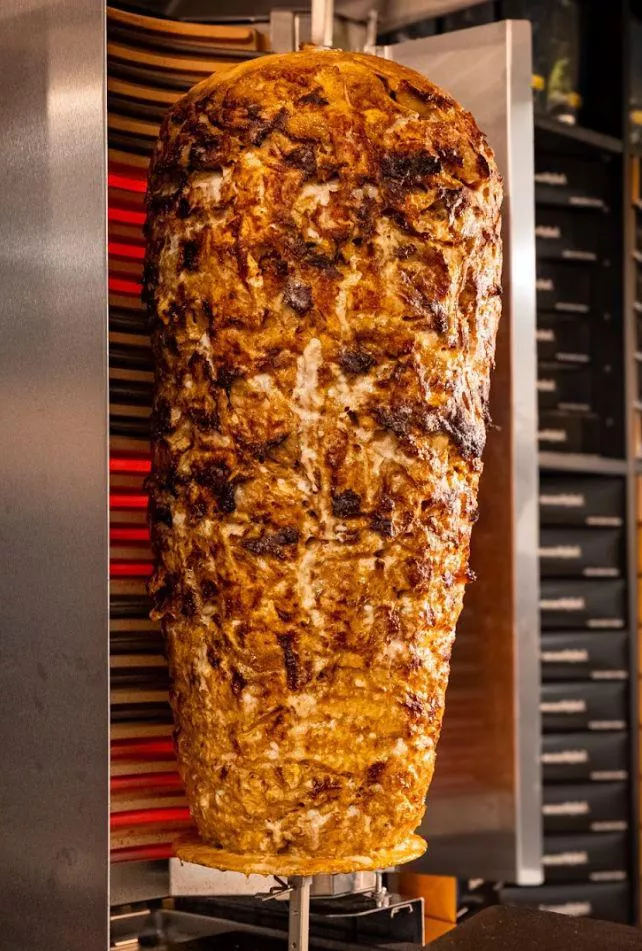
There is no universal recipe. The recurring structure is spit-roasted meat, bread, raw or cooked vegetables, and sauce. Germany’s official food guidance distinguishes compliant “Döner Kebab” from more heavily processed Drehspieß products, but shops still vary widely in bread, meat, and toppings.
Current US menus show the range. Döner Haus’s public menu lists chicken or beef in crispy pide with red cabbage and salad — the Berlin sandwich. GDK USA’s 2026 menu lists beef, chicken, or mixed meat with lettuce, tomato, onion, red cabbage, sauces, and toasted sesame waffle bread. Its UK allergen page states that beef doner contains poultry for added juiciness. California operator DonerG identifies its food as Turkish döner and serves it in wraps, bowls, and plates. Those are three shops describing their own products. Only one of them is the Berlin pocket.
One line, three builds
Sandwich, wrap, or box. One spit behind them.
Many shops reuse one spit and vegetable station across sandwiches, wraps, and boxes. Others run broader Turkish or fast-casual menus.
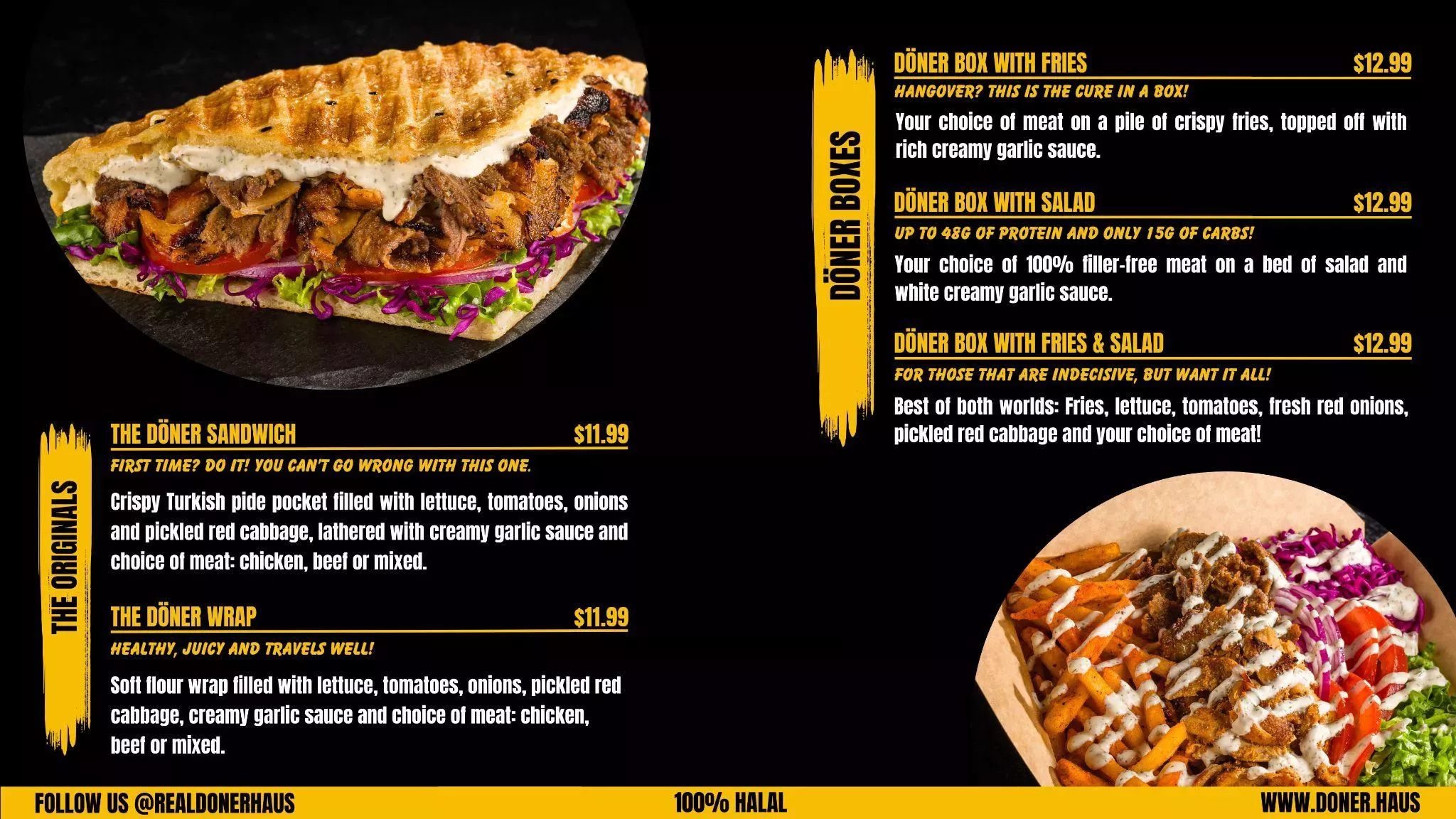
Meat carved from a turning spit is the method. In the United States the German sandwich is Döner Haus: toasted pide, the salad load, garlic and chili. GDK is waffle bread with poultry in the beef. Turkish döner, gyro, and shawarma share the machine and then go their own ways.
For the longer history and a fuller anatomy, read the independent Döner Guide chapter.
Frequently asked questions
What does döner mean? “Döner” comes from the Turkish word for “to turn” or “rotating,” describing how the stacked meat slowly turns on a vertical spit as it roasts. Döner kebab means rotating roasted meat.
Is a German döner the same as a Turkish döner? They share the same method and history. “German döner” usually means the vegetable-and-sauce sandwich associated with Berlin.
What kind of meat is used? Beef, veal, lamb, chicken, and mixed preparations all appear; the shop’s menu and ingredient information control.
Is döner considered healthy? Nutrition depends on portion, bread, meat, sauces, and sides.
Related questions
What does döner mean?
Döner comes from the Turkish word for to turn or rotating. Döner kebab means rotating roasted meat.
Is a German döner the same as a Turkish döner?
Same root. The Berlin street version — toasted bread, heavy vegetables, eaten standing — is German.
What kind of meat is used in a German döner?
Classic Berlin uses veal, beef, chicken, or lamb. US shops typically serve beef, chicken, or mix, shaved from a vertical spit.
Is döner considered healthy?
It can be a balanced meal of roasted meat, a large portion of vegetables, and flatbread. Nutrition depends on portion and sauce.